Item Title
1. Item imageThe blog index is configured for church news posts and future updates.<\/p>","post_title":"Blog","post_status":"publish","post_name":"blog"} succeeded in 580ms: {"ID":13,"post_title":"Home","post_status":"publish","post_name":"home"} codex The blog index is already in place, which saves time. I’m checking one or two existing posts now so the new article matches the site’s current tone and formatting rather than looking like it came from a different site. exec /bin/bash -lc 'wp post get 116 --field=post_content' in /home/ubuntu/apps/ridgecrestchurch.com exec /bin/bash -lc 'wp post get 119 --field=post_content' in /home/ubuntu/apps/ridgecrestchurch.com exec /bin/bash -lc 'wp post get 121 --field=post_content' in /home/ubuntu/apps/ridgecrestchurch.com succeeded in 572ms:
A prayer request does not need to sound polished. It needs to be clear enough for the church to pray without guessing.
By Marcus Reed | Updated June 23, 2026
When people sit down to write a prayer request, the same practical questions come up fast: How much context is enough? What should stay private? Can I ask for prayer for someone else? And how do I make the request easy for the church to read and use well?
Those are good questions. Prayer is not a performance, and the Bible treats it that way. Philippians 4:6-7 points toward honest, direct prayer; Matthew 6:6 reminds believers that prayer can also be private and disciplined. A useful church request follows the same logic: enough context to be specific, enough restraint to protect what should stay private, and enough clarity that people can pray with purpose. For a compact topical index of related passages, OpenBible.info prayer topic page is a useful companion while you draft.
If you want the shortest path, start with the church Contacts page, or use the site's contact form if that is more convenient. If you are looking for broader church information while you prepare your message, the Resources page is a good place to get oriented.

Why We Ask for a Little Context
Prayer teams do better with signal than with noise. A short note that says what is happening, who it affects, and what kind of prayer is needed gives the church something concrete to carry. A vague request forces people to fill in the blanks, and that is where confusion starts.
Context also helps the church handle requests appropriately. Some needs are fine to share broadly. Some should stay with a limited group. Some should be treated as private pastoral matters. The more clearly you state your preference, the less guesswork is required on the other side.
There is a third reason, and it is the one people often skip: context respects the person who is asking for prayer. A request that is too thin can feel detached; a request that is too detailed can feel exposed. The goal is not to narrate your whole life. The goal is to give enough information for faithful prayer and responsible care.
A Quick Template You Can Copy and Paste
If you are not sure where to start, use this format. It is simple on purpose.
Name: [Your name]
Request: [One short sentence about the need]
Details: [Only the facts that help people pray well]
Timeframe: [Today, this week, on [date], or ongoing]
Ongoing vs. one-time: [One-time / recurring]
Sharing preference: [Public / private / limited sharing]
Contact: [Optional phone or email if a follow-up may help]
That is enough for most situations. If you need more privacy, leave out the contact line and keep the description general. If the request is for someone else, say so clearly in the first line so the church understands the relationship and the permission level.
A few quick definitions help here:
- Public prayer: a request that can be shared more broadly with the church.
- Private request: a request that should stay with a smaller, limited group.
- Ongoing request: a situation that needs repeated prayer over time.
- Timeframe: when the need is happening or when support is most important.
Think of the template as a floor, not a ceiling. You can always add a sentence, but you do not need to write a paragraph for every line. A church can work with a concise request. It cannot work with a mystery wrapped in spiritual language.
Do Include
The most useful prayer requests include the facts that actually help someone pray.
| Include this | Why it helps |
|---|---|
| A clear request in one sentence | It tells the reader exactly what kind of prayer you are asking for. |
| Specific needs or concerns | “Healing,” “wisdom,” “travel safety,” or “comfort” are easier to pray for than a vague concern. |
| Relevant dates or timeframes | Dates help the church know what matters now, this week, or later. |
| Whether the request is confidential | Privacy preferences should be stated plainly, not left to interpretation. |
| Whether the request is ongoing | A continuing need may be placed on a prayer list differently from a one-time update. |
One useful habit: write the request as if someone else has to read it once, understand it immediately, and pray right away. That is the operational standard. Church communication is not a scavenger hunt.
Here are a few examples of good, concise wording:
- Healing: “Please pray for Sarah as she prepares for surgery on Thursday. We are asking for peace, skill for the medical team, and steady recovery.”
- Family support: “Please pray for our family during a difficult week. We need wisdom, patience, and rest.”
- Guidance: “Please pray for discernment as I make a work decision by the end of the month.”
- Comfort: “Please pray for comfort and strength after a recent loss. This can stay private.”
Notice what is not happening there. There is no long backstory, no dramatic language, and no pressure to explain every detail. The request stays readable.
Don’t Include
Good judgment matters. A prayer request is not the right place for everything.
| Leave this out | Why to avoid it |
|---|---|
| Overly personal details | If it would make you uncomfortable to read out loud, it probably should not be in the request. |
| Information you do not have permission to share | Consent matters, especially when the request involves another person. |
| Long background narratives | The main need should stay visible. A request that rambles can hide the actual prayer point. |
| Unnecessary medical, family, or financial details | More detail is not always better. Sometimes it is just more detail. |
| Anything you are not comfortable sharing publicly | If it feels too exposed, mark it private or keep it brief. |
If a detail does not help someone pray, leave it out. That is usually the right filter. The church does not need a case file. It needs enough context to respond with care.
If You Are Requesting Healing, Guidance, or Comfort
These are the situations where people often over-explain or under-explain. The middle path is usually best.
For healing, say what kind of prayer is needed without turning the note into a medical summary. For guidance, name the decision and the deadline if there is one. For comfort, say what kind of support would be most helpful: peace, strength, patience, reassurance, or rest.
You can borrow one of these patterns:
- Healing: “Please pray for healing and wise care as I recover from treatment this week.”
- Guidance: “Please pray for clarity as our family considers next steps for school and work.”
- Comfort: “Please pray for comfort, stability, and help with the next few days.”
- Strength: “Please pray for strength to stay steady through a difficult season.”
If you want to keep a request private but still specific, say that directly:
“Please pray for healing for a family member this week. We are not ready to share details publicly, so please keep this private.”
That kind of wording does two jobs at once. It gives the church a prayer focus and sets a boundary without making the request awkward.
For a broader biblical frame, James 5:16 connects prayer with honest confession and mutual care. The point is not performance. The point is trust and clarity.
If You Are Submitting for Someone Else
People often ask for prayer on behalf of a spouse, child, parent, friend, or coworker. That is normal. The key is to say two things clearly: your relationship to the person and whether you have permission to share the request.
Useful wording looks like this:
- With consent: “Please pray for my father, who gave me permission to share that he has a procedure next week.”
- Without detail: “Please pray for a friend who is facing a hard family situation.”
- For a child: “Please pray for our son as he starts treatment. We are asking for peace and wisdom.”
What matters here is not formality. It is trust. If you are speaking for someone else, do not overshare just because you can. Use the smallest amount of information that still tells the church how to pray.
If consent is unclear, keep the request general and private. That is the safer default. You can always add detail later if permission is granted and the situation changes.
Sharing Preferences: Public Prayer vs. Private Request
Not every request belongs in the same channel. A church needs both public prayer and private care, but they are not the same thing. Choosing the right lane keeps the request useful.
| Sharing choice | Best when | What to say |
|---|---|---|
| Public prayer | The need is general and you are comfortable with broader church awareness. | “Please pray for our family this week as we travel.” |
| Private request | The matter is sensitive, personal, or not ready for wider sharing. | “Please keep this private and pray for wisdom as we work through a family matter.” |
| Limited sharing | You want prayer but do not want every detail repeated. | “You may share the general need, but please leave out the details.” |
If you are unsure, choose the more private option. That is the conservative decision and usually the right one. It is easier to expand a request later than to retract details after they have already gone farther than you intended.
If the request becomes something broader for the church to know about, you can also look to the News page for public updates. That page is for church communication, not a place to assume personal details will be posted. Public and personal are not the same category, even when the same people are involved.
How to Submit
Once your request is ready, use the church’s normal contact paths. The simplest route is usually the Contacts page. If you prefer a form-based route, use Contact Us. Either way, keep the message short, specific, and consistent with the privacy level you chose.
A helpful submission usually has three parts:
- The request itself: one or two clear sentences.
- Your privacy note: public, private, or limited sharing.
- A follow-up option: a phone number or email if you want someone to reach back out.
What happens after that? In practical terms, the church receives the note, reads the request, and handles it according to the communication path and privacy preference you provided. If more information is needed, someone may follow up. If no follow-up is needed, the request can still be prayed over without extra drama. That is usually the best case. Prayer requests are not package tracking.
Do not build your wording around a guaranteed response time or a guaranteed outcome. A church can promise care and diligence. It cannot promise the timing of every answer. Keep the focus on the request itself, and keep praying while the message moves through the normal process.
If you need more than a brief prayer note, say so. A sentence like “We would appreciate a follow-up conversation if possible” gives the church a better signal than a wall of text. If the matter is urgent, say that plainly near the top of the message. Simple language wins here.
A Short Checklist Before You Send
- Is the request clear in one sentence?
- Did you include the type of prayer needed?
- Did you leave out anything private or unnecessary?
- Did you note whether the request is public, private, or limited?
- If it is for someone else, did you mention your relationship and consent?
- If timing matters, did you include the relevant date or timeframe?
If you can answer yes to those six questions, the request is probably ready. There is no prize for over-writing it.
If You Are Not Sure What to Say
Some people stall because they think they need perfect wording before they can ask for prayer. They do not. You only need enough clarity to make the need understandable. Start with the most basic version of the request, then add one detail that helps the church pray well. That is often enough.
A simple three-step method works:
- Name the need. Say whether the prayer is for healing, guidance, comfort, travel, or another concern.
- Add the timing. If there is a date, deadline, or season that matters, include it.
- Set the privacy level. Tell the church whether the note is public, private, or limited.
If you still feel stuck, write the message as if you were sending it to one mature Christian friend who will pray responsibly and not gossip. That mental model is useful. It trims away performance language and leaves only what matters. If the request gets more specific later, you can always send an update through the same church contact path.
That is another reason the template matters. It lets you begin before you feel fully composed. Most people are not composed when they need prayer. That is usually the point.
Common Mistakes That Make Requests Harder to Use
Most weak prayer requests fail for ordinary reasons, not dramatic ones. The note is too vague, too long, too private in the wrong place, or too public for the situation. Clean that up before you send it and you save everyone time.
- Leaving out the actual request: “Please pray for my family” is not enough by itself. Add the reason.
- Writing a full explanation first: the prayer point should show up in the first sentence, not after three paragraphs.
- Using code words: if the church has to decode your message, it is not a clear request.
- Sharing too much detail: more information is not always more help. Sometimes it is just more exposure.
- Forgetting the privacy note: public, private, or limited sharing should never be a guessing game.
A practical test helps here: read the request out loud once. If it sounds muddled, you probably wrote too much or too little. Trim it until the sentence does the job.
Three Finished Examples
If you would rather copy a complete version than build one piece by piece, use one of these as a model:
Example 1: “Please pray for my mother as she prepares for surgery on Monday. We are asking for peace, skill for the doctors, and a smooth recovery. Please keep this private.”
Example 2: “Please pray for our family this month as we handle a move, a new school schedule, and a lot of change. We would appreciate wisdom and steadiness. The general request may be shared, but please leave out details.”
Example 3: “Please pray for a friend who is grieving. I have permission to ask for prayer, but not to share more details publicly. Please pray for comfort and rest.”
These examples are short for a reason. They say what is needed, when it matters, and how public the request may be. That is the job.
If you need help thinking through what kind of support fits the situation, the Resources page is a sensible next stop. It will not solve every problem, which is a rare and refreshing limitation for a church website.
Closing Encouragement
A good prayer request is not fancy. It is faithful, clear, and respectful. If you keep the message focused on the need, the timing, and the privacy level, you make it easier for the church to do what churches are supposed to do: pray, care, and respond with wisdom.
Start with the Contacts page or Contact Us form, keep your wording simple, and let the church know whether the request should stay private. If you want to think through other next steps while you wait, the Resources page can point you to additional support, and News can help you stay aware of broader church updates.
Finally, keep praying after you submit. That part still matters. The church can handle the message, but you should still bring the burden to God directly. 1 Thessalonians 5:17 keeps the instruction short for a reason.
succeeded in 565ms:A first church visit should not require guesswork. The safest plan is simple: arrive a little early, find the welcome area, ask one clear question at a time, and leave with one next step. That keeps the visit calm, even if you are new to church or returning after a long gap.
If you are wondering who Ridgecrest Baptist Church is, where you should go on campus, what to do if you have children, or who can answer a question after the service, this guide is built for that. It gives you a steady visit plan so you can walk in with more confidence and less pressure.
The Events Calendar and News pages can help you confirm what is happening that week, but the bigger goal is simpler: know where to go, know who to ask, and know what is optional. If you want a broader baseline on public access and accommodations, the ADA National Network and the U.S. Department of Justice ADA page are useful reference points.
Start Here: Arrive with Confidence
Arrive 10 to 15 minutes early if you can. That gives you time to park, find the entrance, and ask about kids check-in or seating before the service begins. If you are running late, do not turn the car around. Walk in anyway, find the welcome team, and let them help you settle in.
Look for clearly marked parking spaces, an obvious main entrance, and any accessible parking close to the door. If you need a quieter path into the building, use the easiest entrance rather than trying to solve the whole campus map at once. One clear door is better than three uncertain ones.
- Bring the people who are coming with you, not a perfect plan.
- Have a phone with enough charge to open the website if needed.
- Know whether you are checking in children before you enter the sanctuary or after you speak with a greeter.
- If you use a mobility aid, hearing support, or need extra time, mention that early.
If you want a quick preview of the church’s broader rhythm, the home page is the shortest place to start. It gives you the main navigation without forcing you to hunt through every page.
Your First 10 Minutes: Where to Go When You Walk In
When you walk in, do not try to decode the whole building on your own. Go to the welcome area first. That is where a greeter, usher, or hospitality volunteer can point you in the right direction with the least amount of friction.
The basic flow is usually simple:
- Enter and pause at the welcome area.
- Ask where the main gathering space is.
- Ask whether your family needs to check in anywhere.
- Find seating before the service starts.
- Keep a note of the person or room you may want to revisit after the service.
If you have children, ask where the kids check-in happens before you head into worship. If you have youth with you, ask whether they stay with you in the main service or have their own room or meeting space that morning. The point is not to memorize every hallway. The point is to reach the right door once.
| What you need | Who to ask | Why it helps |
|---|---|---|
| Main sanctuary or worship space | Greeter or usher | Gets you seated without wandering the building |
| Children’s check-in | Welcome team or kids ministry volunteer | Helps parents handle pickup and safety details early |
| Youth room or meeting area | Youth leader or hospitality team | Reduces confusion for older children and teens |
| Accessibility support | Any greeter or staff member | Lets the team help before a small issue becomes a delay |
What to Ask a Greeter or Hospitality Team
Greeters are there to answer practical questions. Keep the questions short and direct. You do not need to explain your whole life story before asking where to sit.
Good first questions include:
- Where is the main worship service?
- Where should first-time guests go?
- Is there a kids check-in area?
- Where do I take my child after check-in?
- Who should I talk to if I have a question after the service?
- Is there anything I should know about today’s order of service?
If you feel awkward asking out loud, bring the question down to one sentence. That is enough. The person helping you does not need a polished speech. They need a starting point.
Use the greeter to solve the immediate problem, not the whole month. You can always come back later for ministries, events, or next-step conversations.
How to Follow Along During Worship
Once you are seated, your job is to observe and participate at a comfortable pace. If the service uses printed materials, a screen, or announcements, follow along with what is in front of you. If you do not know whether to stand, sit, sing, or remain quiet, it is fine to watch first and join when you are ready.
Many first-time visitors worry that they will do the wrong thing at the wrong moment. That is a common worry, and it is usually smaller than it feels. Most churches would rather have a calm guest than a tense one. Stay present, listen, and let the room teach you the pattern.
A few practical habits help:
- Keep your phone on silent.
- If you use a printed bulletin, hold on to it until the service ends.
- When announcements are given, note anything that might matter to your family.
- If you miss part of a cue, do not panic. Rejoin at the next obvious moment.
If you want a better sense of the setting before you visit, the News page and Events Calendar are the best places to check. They are more useful than guessing what a Sunday will contain.
After the Service: The Best Next Steps
After the service, do not rush out if you want to connect with someone. A short introduction is enough. You can say, “This was my first visit,” and let the conversation stay there. The next step may be a name, a card, a prayer request, or simply knowing where to return next time.
Here is a simple post-service plan:
- Introduce yourself to one person near you.
- Ask where questions should go if you want to come back.
- Learn whether there is a pastor, leader, or volunteer available after the service.
- Take note of any event or ministry that might be worth a second visit.
If you want to move from a first visit to a second one, the safest path is to keep it small. Check the Events Calendar, read the News page, and send one clear message through Contacts if you still have a question.
If You Have Kids or Youth: Who to Talk To
Parents and guardians carry a second checklist. That is normal. You need to know where children go, who checks them in, how pickup works, and whether there are age-specific rooms or activities. Ask those questions early, before the service starts, so you are not solving them with a child in one hand and a bulletin in the other.
Use this order:
- Ask where the kids check-in area is.
- Ask who can explain pickup and room assignment.
- Ask whether youth stay in the main service or move elsewhere.
- Ask what to do if you need to reach your child during the service.
If you want to review the page first, the Kids page is the easiest place to start, followed by Youth for older students. Those pages can give you the language you need before you walk in.
Accessibility and Comfort Questions to Consider
A good visit plan includes comfort questions, not just worship questions. If you need a restroom location, seating near an aisle, a quieter space, or help hearing what is being said, ask before the service starts. A few seconds of conversation is better than ten minutes of uncertainty.
Questions worth asking:
- Where are the restrooms?
- Is there seating that is easier to reach?
- Can I sit near the back, aisle, or front if that helps?
- Is there hearing support available?
- Who can help if I need to step out during the service?
Accessibility should never feel like a special favor. If you need something simple and specific, ask for it directly. The earlier you ask, the easier the rest of the visit becomes.
If you want background on access planning and public accommodations, the ADA National Network and the U.S. Department of Justice ADA page are solid references. They are not a replacement for asking the church itself, but they do explain why clear access matters.
Common Worries Answered
What if you are late? Walk in calmly, find a greeter, and ask where to sit. Do not treat lateness like a failure mode. It is just a delay.
What if you do not know what to do? Then ask. That is exactly why the welcome team exists. Most people would rather answer a small question than watch a guest guess in silence.
What if you are unsure about giving? You do not need to solve that on a first visit. Give if you want to, observe if you are still deciding, and keep the focus on understanding the church. A visit is not a transaction.
What if you want to leave quietly? That is fine too. A first visit does not obligate you to stay for a long conversation. Sometimes the right next step is simply to return another time with a better map.
One-Week Follow-Up
If the visit felt worth repeating, spend one week doing three small things: check the News page for updates, review the Events Calendar for anything that fits your schedule, and use Contacts if you still need an answer. That is enough to move from “I visited once” to “I know what to do next.”
Key points to remember:
- Arrive early enough to ask one or two questions without rushing.
- Go to the welcome area first.
- Use short, direct questions with greeters or hospitality volunteers.
- Ask about kids, youth, seating, and accessibility before the service begins.
- Follow up with News, Events, and Contacts after the visit if you want to return.
That is the whole plan. No extra ceremony required.
succeeded in 595ms:The News page is where the church quietly tells you what matters next. Ignore it, and you will keep acting surprised when an event, reminder, or ministry update shows up after the fact. A news page is not decoration. It is the place where Ridgecrest Baptist Church puts the practical details that decide whether you arrive prepared or arrive confused.
If you have ever asked yourself, “What changed?” “Who is this for?” “Do I need to do anything?” or “Why did nobody tell me sooner?”, that is exactly why this page exists. The answer is not mystery. It is usually a date, a topic, a small action item, and your responsibility to read the whole thing instead of the first sentence.
This guide walks through how to use the Ridgecrest News page without pretending attention is automatic. You will learn what belongs there, where to find it, how to scan updates fast, how to turn an announcement into a calendar reminder, and when to use the Events Calendar, Contacts, or Church Map instead of hoping a vague memory will save you.
For context, the Ridgecrest site also keeps related information on the About Us, Events Calendar, and Contacts pages, so you do not have to guess which page is doing which job. That is the good news. The bad news is that you still have to read the page.
What the News page is for
The News page is where short, useful updates live. Not the full history of the church. Not a sermon archive. Not a place for vague encouragement dressed up as information. It is for the kinds of announcements that affect attendance, timing, preparation, or follow-up.
| What you see | What it means | What you should do |
|---|---|---|
| Event announcement | A dated gathering, deadline, or special church activity | Check the time, location, and whether you need to respond |
| Ministry update | Information for Kids, Youth, volunteers, or a specific group | Read whether it applies to you or your household |
| Special notice | A schedule change, church-wide reminder, or urgent correction | Put it on your calendar and stop relying on memory |
The point is simple: the News page is not there to entertain you. It is there to reduce avoidable confusion. Most church problems are not dramatic. They are just small timing errors repeated by too many people.
Where to find the News page in the main navigation
On the site, the News page is part of the main navigation. If you are on desktop, look across the top menu. If you are on a phone, open the navigation menu and look for the same label. No treasure hunt required. Just read the menu instead of tapping at random like a distracted raccoon.
For the live page, use the News link. The site also keeps a simple front-door version of the page at /news/, so the content is easy to reach either way.
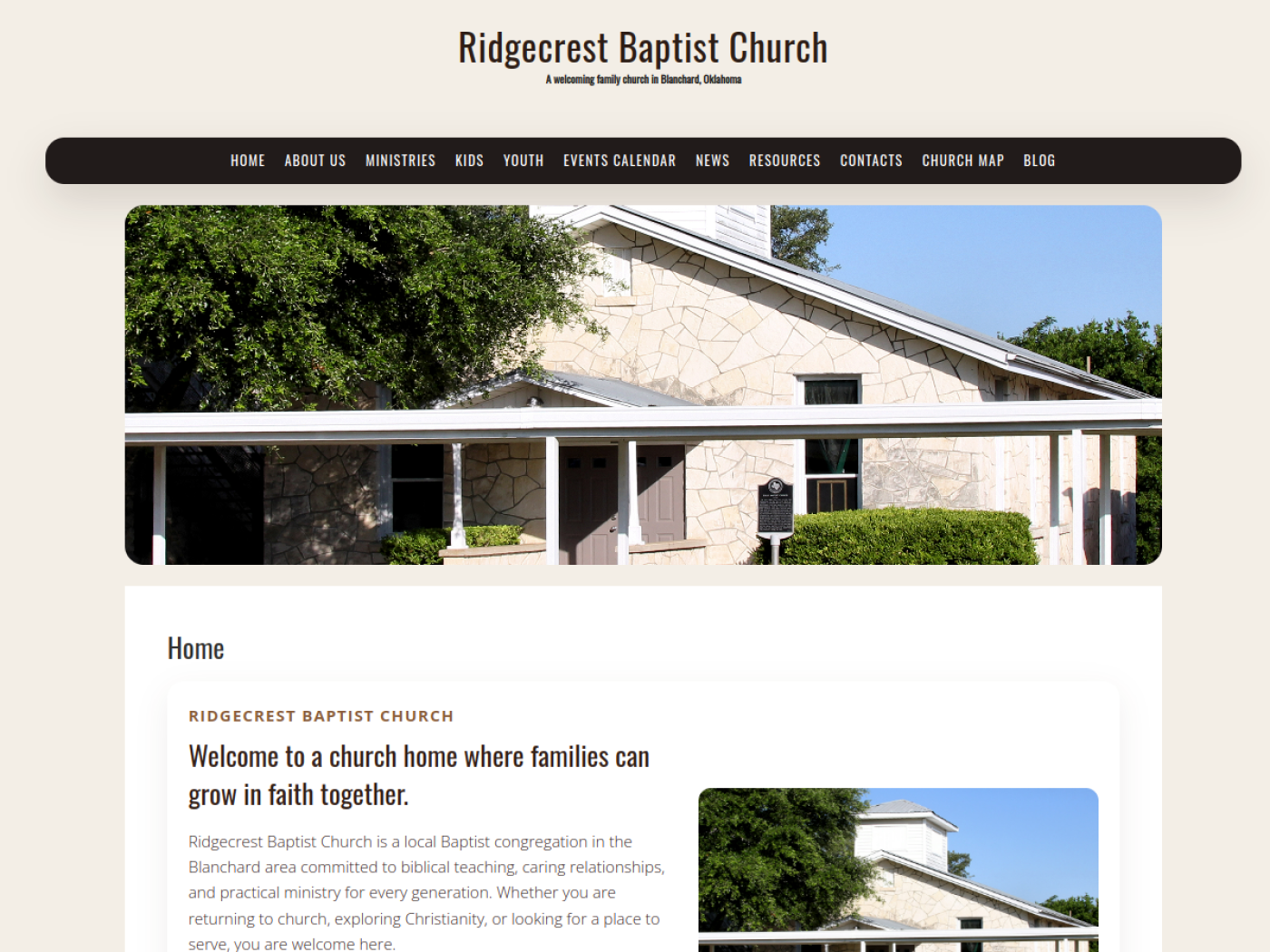
If you are already on the homepage, the quickest path is usually: homepage, main menu, News. If you are already on the News page, congratulations, you have won a round of basic navigation. Now read the actual update.
How to scan an update quickly
Most people do not need to read every line of a church update with a scholar’s commitment. They need the facts. Look for the parts that change what you do next.
- Date - When does it happen, and is there a deadline before it?
- Topic - What is this about in one sentence?
- Audience - Who actually needs this: everyone, parents, students, volunteers, or a specific class?
- Action needed - Do you need to RSVP, bring something, sign up, show up early, or do nothing at all?
A practical scan takes less than a minute if you resist the urge to read every word twice. Start with the headline, then the first paragraph, then the date and contact details. If the post does not answer those four questions, keep reading until it does or until it proves it does not know what it is doing.
Here is the working rule: if an update does not tell you when, who, and what next, it is incomplete from a visitor’s point of view. That is not your failure. It is the post’s.
Fast-read checklist
- Read the title.
- Find the date.
- Check who the update is for.
- Look for a deadline or response request.
- Put the event or reminder into your calendar if it matters to you.
Common types of posts you will see
The News page usually carries the same kinds of items, because churches are not that mysterious when they finally decide to write things down.
Service reminders
These are the simplest posts and the easiest to ignore. Do not. They often confirm service times, special schedules, or location changes. If the church is adjusting a service or class, this is where the update usually lands first.
Special events
Events can include fellowship meals, student activities, children’s ministry gatherings, church-wide celebrations, and seasonal services. If there is a deadline, ticket, RSVP, or sign-up, it belongs here. That is the part people forget and then pretend was never mentioned.
Ministry highlights
Sometimes the News page highlights what a ministry is doing, who it serves, or how to participate. This is useful because it tells you whether the update is just informational or actually inviting you to act. Most people confuse those two. They should not.
Prayer needs and follow-up notes
Not every update is about logistics. Some posts will point readers toward prayer, care, or encouragement. Those updates are different: read them carefully, respond appropriately, and do not treat them like event spam. That is not a good look.
How to respond to what you read
The whole point of reading a church update is to do something useful with it. Otherwise you are just collecting information the way some people collect receipts.
- RSVP when asked. If a post asks for a response, give one. That is not optional decor. It is part of the plan.
- Bring what the post names. If the update says bring food, supplies, forms, or a Bible, bring those things instead of improvising your way into inconvenience.
- Ask questions early. If the details are unclear, use the contact page before the event. Confusion gets cheaper when it is solved early.
- Share it with the right person. If the update affects your family, students, or ministry group, forward it before it disappears into the swamp of unread messages.
When in doubt, use the Contacts page or the direct contact form. Both land you in the same place emotionally: someone on the church side can answer the question instead of making you guess.
If the update affects where to park, which entrance to use, or when to arrive, check the Church Map as well. A news item can tell you the plan, but a map tells you where to physically go. Oddly enough, that still matters.
Planning ahead: turn the news item into a calendar action
Reading an update is only half the job. The other half is making sure your future self does not quietly sabotage you. If something matters, put it on your personal calendar the same day you read it.
That can be as simple as copying the date, time, location, and one-line purpose into your phone calendar. If you use Google Calendar, its help page for creating events is a decent place to start: Google Calendar’s event creation help. The mechanics are not impressive, but neither is forgetting something you already meant to attend.
Apple users can do the same thing in the iPhone Calendar app, which has its own step-by-step help page: Apple’s Calendar instructions for iPhone. Same principle. Put the thing in the calendar before the week eats it.
If you live in Outlook, the official calendar overview is here: Microsoft’s Outlook Calendar overview. No mystery, no drama, and no excuse for “I meant to go.”
Use reminders for anything that has a deadline or requires preparation. If an event says “bring food,” “arrive early,” or “sign up by Thursday,” that is not optional trivia. It is the actual task.
How to stay in the loop between Sunday services
Do not wait until Sunday to discover the thing you were supposed to know on Tuesday. The News page and the Events Calendar work together. One explains what is happening. The other helps you see when it happens.
- Check News for announcements and changes.
- Check Events Calendar for dates and upcoming gatherings.
- Check Home if you want the main site entry point again because you clicked yourself into confusion.
A decent habit is to review News once during the week and again before the weekend. That is enough to catch most updates without treating the church website like a full-time job.
Quick FAQ
What if I missed it?
Start with the News post and the Events Calendar. If the update included a deadline or sign-up, use the contact page immediately to ask whether anything can still be done. Do not assume silence means the issue disappeared. It usually means you have not checked the right page yet.
Where do I find the details?
Use the News page first. If the post is brief, the next stop is the Events Calendar, then Contacts or Church Map if location or timing matters. If the information still feels thin after that, the problem is not you. The update needs more detail.
Who do I contact?
Use Contacts for church staff information and contact.php if you want the direct contact path. If the matter is location-specific, add the Church Map to the mix so you are not asking a question that the map already answered.
Next steps
If you only remember three things, make them these: read the News page, check the Events Calendar, and contact the church when the update affects you directly. That is enough to stay informed without pretending every announcement will somehow reach you by psychic means.
Start with the News page, then move to the Events Calendar for dates, and use Contacts or the Church Map when you need a person, a place, or both. If you want more background on the church itself, the About Us page is there too.
That is the whole trick. Read the update, identify the action, and move it into your calendar before it evaporates. Basic process. Less drama.
codex I’m at the point of writing, so I’m making the article itself now. I’m keeping the structure practical: a short intro, a clear 3-part testimony shape, a table for length choices, a simple fill-in template, and a conservative submission section that points people to the church’s existing contact and news pages. apply patch patch: completed /home/ubuntu/apps/ridgecrestchurch.com/wp-content/uploads/flatlogic-article-tasks/job-660/post-content.html diff --git a//home/ubuntu/apps/ridgecrestchurch.com/wp-content/uploads/flatlogic-article-tasks/job-660/post-content.html b//home/ubuntu/apps/ridgecrestchurch.com/wp-content/uploads/flatlogic-article-tasks/job-660/post-content.html new file mode 100644 index 0000000000000000000000000000000000000000..44f43f4f510ce112accaddaa47476104c372ff0f --- /dev/null +++ b//home/ubuntu/apps/ridgecrestchurch.com/wp-content/uploads/flatlogic-article-tasks/job-660/post-content.html @@ -0,0 +1,353 @@ +If you are staring at a blank page, start here: tell the truth, keep the focus on God, and leave the rest out.
+ +By Maya Collins | Updated July 3, 2026
+ +When someone wants to share a testimony at Ridgecrest, the same questions usually show up fast: What do I say? How long should it be? What should I leave out? And where do I send it if I am ready?
+ +Those are sensible questions, and they are easier to answer than they feel. In Scripture, sharing what God has done is not treated as a performance. It is treated as witness. Psalm 107:2 says the redeemed should say so. 1 Peter 3:15 calls believers to be ready to give a reason for the hope they have. And Revelation 12:11 connects testimony with steadfast faith. Those passages do not make a testimony complicated. They make it honest.
+ +If you want the church’s wider context before you write, the About Us page explains Ridgecrest’s mission, while the Resources page can help you find related materials. If you are new to the site, the Home page is still the cleanest front door. Simple works. Simple usually lasts longer too.
+ +
+ This guide walks through why testimonies matter, how to shape one in three parts, how long to keep it, which prompts are safe to use, and how to submit it through the church’s normal contact path. If you are nervous, that is fine. Nervous is not the same as unprepared. We can work with nervous.
+ +Why testimonies matter
+ +A testimony matters because it turns a private story into public encouragement. In a church setting, that does three useful things at once. It helps people see God’s work in real life, it strengthens the person listening, and it gives the person speaking a clear way to practice gratitude without dressing it up.
+ +That does not mean every testimony has to be dramatic. In fact, some of the most helpful ones are ordinary and steady. A testimony about patience, provision, healing, or a changed attitude can be just as meaningful as a testimony about a major turning point. The size of the story is not the point. The direction of the story is.
+ +If I had to reduce the purpose to one sentence, I would say this: a testimony helps the church hear where God has been at work without asking the speaker to turn their life into a stage show. That is a healthy trade. It keeps the attention where it belongs.
+ +Here is the second practical reason testimonies matter: they can help people who are unsure how to speak about faith in everyday language. Many people know what God has done, but they do not know how to say it without sounding stiff. A testimony gives them a structure that is familiar, respectful, and easy to follow.
+ +Think of it as a small bridge. On one side is a real life story. On the other is a church that wants to listen well. The testimony is the bridge between them.
+ +A good testimony in 3 parts
+ +The simplest structure is three parts: Before, What changed, and What God is doing now. That shape keeps the story moving and prevents it from wandering into every side road along the way.
+ +Here is the working definition I use:
+ +-
+
- Before: a brief snapshot of where you were or what was going on. +
- What changed: the moment, process, conversation, prayer, or decision that shifted things. +
- What God is doing now: the fruit, lesson, or steady change that is happening today. +
That is enough for most testimonies. You do not need every detail. You do not need a dramatic introduction. You do not need to explain every chapter of your life to prove the point. A testimony is not a courtroom closing argument. It is a clear account of grace.
+ +Before
+ +Keep the “before” section short. Two or three sentences are usually enough. You are giving people context, not a full biography.
+ +Good “before” language sounds like this:
+ +-
+
- “For a long time, I carried anxiety and tried to solve everything on my own.” +
- “I grew up around church, but I had not really made faith my own.” +
- “I was in a season where I felt worn down and unsure what to pray.” +
Notice the pattern. The sentences are plain. They tell the truth. They avoid extra color. That is enough.
+ +What changed
+ +This is the heart of the testimony. Something happened here, even if it happened slowly. Maybe it was a conversation with a pastor, a verse that stayed with you, an answered prayer, a hard season that brought you back to prayer, or a decision to trust God in a new way.
+ +Strong “what changed” wording often starts like this:
+ +-
+
- “Then I began to…” +
- “A friend prayed with me and…” +
- “I kept coming back to this passage…” +
- “Over time, I realized…” +
If the change happened over months instead of one big moment, that is fine. You do not need to force a dramatic turning point into the story if the real story is slower and steadier. Some of God’s work is a quiet rebuild, not a fireworks display. That still counts.
+ +What God is doing now
+ +This part gives the testimony its present tense. It tells the church what life looks like now and what fruit is showing up. It also keeps the story from ending in the past, which is an easy trap.
+ +Examples:
+ +-
+
- “Now I still have hard days, but I pray differently.” +
- “Today I am learning to trust God with the next step instead of the whole map.” +
- “I am not where I want to be yet, but I can see growth.” +
That last line is useful because it stays honest. A testimony does not need to say, “everything is fixed now.” It can say, “God is working now,” which is usually the better sentence anyway.
+ +Length guidelines
+ +Length matters because church time is shared time. A testimony should be long enough to say something real and short enough to respect the people listening. That balance is not difficult, but it does need a little discipline.
+ +| Format | +Best for | +Typical length | +Why choose it | +
|---|---|---|---|
| Brief testimony | +Sunday service, announcement moment, or a short public share | +2 to 3 minutes | +It keeps the story focused and easy to follow | +
| Longer testimony | +Small group, event night, or planned sharing time | +5 to 7 minutes, sometimes a little more if requested | +It gives more space for context and reflection | +
Use the short version when the setting is public, time is limited, or the church asked for a quick share. Use the longer version when the setting is designed for reflection and the people listening expect more detail. If you are unsure which one fits, choose the shorter version and let the church ask for more if needed.
+ +A useful rule is this: if you cannot read it out loud without feeling rushed, it is too long. If it feels too thin to mean anything, it may be too short. The middle ground is usually the right one.
+ +Safe prompts to get started
+ +If you do not know where to begin, use a prompt. Prompts are not gimmicks. They are a quiet way to open a door when the room feels locked.
+ +-
+
- Faithfulness: “Where have I seen God remain steady, even when I was not?” +
- Answered prayer: “What did I pray for that God answered in a clear or surprising way?” +
- Learning through a challenge: “What did a hard season teach me about trust, patience, or prayer?” +
- A turning point: “When did I begin to see things differently?” +
Those prompts are safe because they point toward reflection without pushing you into private detail. They also keep the story in the realm of faith instead of trying to turn it into a public diary entry. That is a helpful boundary.
+ +If one prompt feels too big, shrink it. For example:
+ +-
+
- “Where have I seen God remain steady?” can become “Where did I feel less alone than I expected?” +
- “What did I pray for?” can become “What prayer has stayed on my mind?” +
- “What did a hard season teach me?” can become “What did I learn that I would not have learned otherwise?” +
You are allowed to start small. Small is often clearer. Clear is often better.
+ +Keep it respectful
+ +A testimony should build up the church, not drag the room into a debate. That means keeping the tone respectful, the details intentional, and the focus on your own experience instead of somebody else’s mistakes.
+ +Here is a simple way to check your draft before you send it:
+ +| Do this | +Skip this | +
|---|---|
| Speak about your own experience. | +Use the testimony to attack another person or group. | +
| Keep the focus on what God has done. | +Turn the story into a long complaint session. | +
| Protect sensitive details. | +Share private family, medical, or counseling information you would not want repeated. | +
| Use plain language. | +Use confusing church jargon or dramatic language that hides the point. | +
| Stay gracious about people who helped or disagreed with you. | +Use the moment to settle an old score. | +
That last line matters. If a testimony starts sounding like a scorecard, the room loses the thread. The best ones stay calm, direct, and charitable. They speak truth without sharpening every edge.
+ +If you are not sure whether a detail is too sensitive, leave it out. You can always say less. You cannot always un-say what you already announced to a room full of people.
+ +A simple template you can fill in
+ +Here is the easiest version I know. Copy it, fill in the blanks, and read it aloud once.
+ +Before:
+For a while, I was...
+I felt...
+
+What changed:
+Then...
+God used...
+I began to see...
+
+What God is doing now:
+Today...
+I am learning...
+I still...
+
+Closing line:
+I am thankful because...If you want sentence starters instead of blanks, try these:
+ +-
+
- “For a long time, I…” +
- “Then God used…” +
- “A verse, conversation, or prayer helped me…” +
- “Today I am learning…” +
- “I am thankful because…” +
Here is a completed example that stays brief and respectful:
+ +++ +“For a long time, I carried a lot of worry and tried to solve everything by myself. Then a season of prayer and support from other believers helped me slow down and trust God more. Today I am still learning, but I have more peace, and I am thankful for the way God keeps teaching me to rely on Him.”
+
That is enough. It has shape. It has movement. It does not over-explain.
+ +How to submit
+ +When your testimony is ready, the most conservative path is to send it through the church’s normal contact route. The Contacts page is the simplest place to start. If you prefer a form-based path, use the church contact form if that is what is available on the site. Keep the message short and make the purpose obvious: “I would like to share a testimony.”
+ +Include only the details that help the church handle the request well:
+ +-
+
- Your name and contact information: so someone can reply if needed. +
- Whether the testimony is brief or longer: this helps staff know how to schedule it. +
- Whether you want to share in person or in writing: different settings need different handling. +
- Any privacy note: tell the church if a detail should stay private or be trimmed. +
- Any time limit or date: if the testimony is tied to a service or event, say so. +
If a church ever wants a simple way to route forms, collect responses, or sketch a basic approval flow, a neutral web app generator is one example of the kind of tool people use to prototype that workflow. The point is not the tool itself. The point is that the process should be easy enough for a real person to complete without friction.
+ +For public-facing updates or announcements that are not personal testimony, the News page is the better place to look. It helps separate private sharing from broader church communication, which is a healthy boundary to keep in mind.
+ +What to expect after you submit
+ +You should expect a review, not a promise. That is the responsible way to think about it. In a normal church workflow, someone reads the note, checks whether it fits the setting, and decides what to do next. Sometimes that means a quick yes. Sometimes it means a request to trim the length. Sometimes it means a question about timing or privacy.
+ +What may happen next:
+ +-
+
- You may be contacted for clarification. +
- You may be asked to shorten the testimony for the available time. +
- You may be asked to remove a sensitive detail. +
- You may be given a different sharing format if that fits better. +
- You may simply receive confirmation that the note was received. +
That review step is not a judgment on the value of your story. It is basic stewardship of the room, the time, and the people listening. A church is responsible for more than one person’s voice at a time, so the process needs some order.
+ +If you do not hear back right away, do not assume the message was wrong. Churches often move at the speed of actual people, which is slower than a push notification and more dependable than panic. If timing matters, mention that up front in the submission.
+ +Tips for delivering the testimony
+ +Writing a testimony and delivering it are related tasks, but they are not identical. A page can look calm while a mouth goes a little dry. That is normal. I would plan for that instead of pretending it will never happen.
+ +Here are the habits that help most:
+ +-
+
- Speak slower than feels natural. Nerves push most people to race. A slower pace helps listeners keep up and helps you breathe. +
- Pause at the end of each part. A pause after “before,” “what changed,” and “now” gives the story structure. +
- Keep one copy of your notes nearby. If you lose your place, you can recover without starting over. +
- Do not memorize every word. Know the shape. The exact wording can stay flexible. +
- Practice once or twice out loud. Enough to hear where you rush, not so much that it feels like a speech contest. +
If your hands shake, let them shake. If you need to stop and breathe, stop and breathe. A testimony is not better because it is polished. It is better because it is clear and true. The room can handle a little human friction.
+ +One more practical tip: end with a sentence that sounds finished. Something like “I am thankful for what God has done, and I am still learning to trust Him.” That gives the testimony a clean landing instead of letting it drift to a stop.
+ +A quick rehearsal checklist
+ +-
+
- Can I explain the testimony in three parts? +
- Did I keep the “before” section brief? +
- Did I say what changed without over-explaining? +
- Did I describe what God is doing now? +
- Did I leave out anything too personal or too contentious? +
- Can I read this in the time I was given? +
If you can answer yes to those six questions, you are ready enough. Not perfect. Ready enough is what most good church communication looks like.
+ +Examples of three different testimony styles
+ +Sometimes people need to hear a shape before they trust the shape. These examples show how the same structure can fit different situations.
+ +1. A brief testimony
+ +++ +“For a long time, I carried worry and tried to manage everything myself. Then prayer, Scripture, and a few steady conversations helped me see that I did not have to hold everything at once. Today I still have responsibilities, but I am learning to trust God one day at a time.”
+
2. A testimony about answered prayer
+ +++ +“I had been praying for guidance during a difficult decision. What changed was not a single dramatic moment, but a pattern of peace, wise counsel, and doors opening at the right time. Today I am thankful because God gave me clarity when I needed it most.”
+
3. A testimony about steady growth
+ +++ +“I did not grow through one big event. I grew through small acts of obedience, patient prayer, and a willingness to keep showing up. What God is doing now is quiet but real: I am more patient, more grateful, and more aware of how much I need His help.”
+
Notice how each example stays respectful, direct, and centered on what God is doing. None of them tries to be the most dramatic story in the room. That is a relief for everyone involved.
+ +What to do if you get nervous
+ +If you feel nervous, do not treat that as a sign to cancel. Treat it as a sign to prepare a little better. Nervousness usually means the moment matters to you, which is not a problem. It is just inconvenient from the inside.
+ +Here is the small rescue plan:
+ +-
+
- Take one slow breath before you start. +
- Look at the first sentence of your notes, not the whole page. +
- Speak the first line more slowly than you think you should. +
- Pause when you finish a section. +
- If you lose your place, return to the “before” / “what changed” / “now” shape. +
You do not need to feel brave in order to speak clearly. You just need enough steadiness for the next sentence.
+ +Where Ridgecrest can help
+ +If you are still deciding how to share, use the church’s public pages to get oriented. The About Us page helps you understand the church’s tone. The Resources page can help you gather your thoughts. The Contacts page is the place to send the actual request. And if you want a broader look at what is happening at church, the News page is where you can check for current updates.
+ +If you only remember one thing, remember this: a good testimony does not need to be impressive. It needs to be honest, respectful, and easy to follow. The clearer the story is, the easier it is for the church to hear it well.
+ +Conclusion
+ +Sharing a testimony at Ridgecrest does not have to feel intimidating. Use the three-part shape, keep the length appropriate to the setting, stay respectful with the details, and send it through the normal church contact path when you are ready. That is a workable plan, and workable is often exactly what people need.
+ +Start small if you need to. Start with one sentence if that is all you have. The church can work with a simple, truthful story. If you want to read more about Ridgecrest first, begin with About Us, then check Resources, and use Contacts when you are ready to submit.
+ +Key points to remember:
+ +-
+
- Use the three-part shape: before, what changed, and what God is doing now. +
- Keep the story short enough for the setting, usually 2 to 3 minutes for a brief share. +
- Use safe prompts if you are stuck. +
- Avoid private details, debate, or personal attacks. +
- Submit through the church’s normal contact path and include the basics the team needs. +
- Practice once or twice out loud so the delivery feels steady. +
If you are still unsure where to start, the safest next step is simple: write the first version, read it out loud, and trim anything that does not help the listener hear the main point. Most good testimony work is that ordinary.
diff --git a//home/ubuntu/apps/ridgecrestchurch.com/wp-content/uploads/flatlogic-article-tasks/job-660/post-content.html b//home/ubuntu/apps/ridgecrestchurch.com/wp-content/uploads/flatlogic-article-tasks/job-660/post-content.html new file mode 100644 index 0000000000000000000000000000000000000000..44f43f4f510ce112accaddaa47476104c372ff0f --- /dev/null +++ b//home/ubuntu/apps/ridgecrestchurch.com/wp-content/uploads/flatlogic-article-tasks/job-660/post-content.html @@ -0,0 +1,353 @@ +If you are staring at a blank page, start here: tell the truth, keep the focus on God, and leave the rest out.
+ +By Maya Collins | Updated July 3, 2026
+ +When someone wants to share a testimony at Ridgecrest, the same questions usually show up fast: What do I say? How long should it be? What should I leave out? And where do I send it if I am ready?
+ +Those are sensible questions, and they are easier to answer than they feel. In Scripture, sharing what God has done is not treated as a performance. It is treated as witness. Psalm 107:2 says the redeemed should say so. 1 Peter 3:15 calls believers to be ready to give a reason for the hope they have. And Revelation 12:11 connects testimony with steadfast faith. Those passages do not make a testimony complicated. They make it honest.
+ +If you want the church’s wider context before you write, the About Us page explains Ridgecrest’s mission, while the Resources page can help you find related materials. If you are new to the site, the Home page is still the cleanest front door. Simple works. Simple usually lasts longer too.
+ +
+ This guide walks through why testimonies matter, how to shape one in three parts, how long to keep it, which prompts are safe to use, and how to submit it through the church’s normal contact path. If you are nervous, that is fine. Nervous is not the same as unprepared. We can work with nervous.
+ +Why testimonies matter
+ +A testimony matters because it turns a private story into public encouragement. In a church setting, that does three useful things at once. It helps people see God’s work in real life, it strengthens the person listening, and it gives the person speaking a clear way to practice gratitude without dressing it up.
+ +That does not mean every testimony has to be dramatic. In fact, some of the most helpful ones are ordinary and steady. A testimony about patience, provision, healing, or a changed attitude can be just as meaningful as a testimony about a major turning point. The size of the story is not the point. The direction of the story is.
+ +If I had to reduce the purpose to one sentence, I would say this: a testimony helps the church hear where God has been at work without asking the speaker to turn their life into a stage show. That is a healthy trade. It keeps the attention where it belongs.
+ +Here is the second practical reason testimonies matter: they can help people who are unsure how to speak about faith in everyday language. Many people know what God has done, but they do not know how to say it without sounding stiff. A testimony gives them a structure that is familiar, respectful, and easy to follow.
+ +Think of it as a small bridge. On one side is a real life story. On the other is a church that wants to listen well. The testimony is the bridge between them.
+ +A good testimony in 3 parts
+ +The simplest structure is three parts: Before, What changed, and What God is doing now. That shape keeps the story moving and prevents it from wandering into every side road along the way.
+ +Here is the working definition I use:
+ +-
+
- Before: a brief snapshot of where you were or what was going on. +
- What changed: the moment, process, conversation, prayer, or decision that shifted things. +
- What God is doing now: the fruit, lesson, or steady change that is happening today. +
That is enough for most testimonies. You do not need every detail. You do not need a dramatic introduction. You do not need to explain every chapter of your life to prove the point. A testimony is not a courtroom closing argument. It is a clear account of grace.
+ +Before
+ +Keep the “before” section short. Two or three sentences are usually enough. You are giving people context, not a full biography.
+ +Good “before” language sounds like this:
+ +-
+
- “For a long time, I carried anxiety and tried to solve everything on my own.” +
- “I grew up around church, but I had not really made faith my own.” +
- “I was in a season where I felt worn down and unsure what to pray.” +
Notice the pattern. The sentences are plain. They tell the truth. They avoid extra color. That is enough.
+ +What changed
+ +This is the heart of the testimony. Something happened here, even if it happened slowly. Maybe it was a conversation with a pastor, a verse that stayed with you, an answered prayer, a hard season that brought you back to prayer, or a decision to trust God in a new way.
+ +Strong “what changed” wording often starts like this:
+ +-
+
- “Then I began to…” +
- “A friend prayed with me and…” +
- “I kept coming back to this passage…” +
- “Over time, I realized…” +
If the change happened over months instead of one big moment, that is fine. You do not need to force a dramatic turning point into the story if the real story is slower and steadier. Some of God’s work is a quiet rebuild, not a fireworks display. That still counts.
+ +What God is doing now
+ +This part gives the testimony its present tense. It tells the church what life looks like now and what fruit is showing up. It also keeps the story from ending in the past, which is an easy trap.
+ +Examples:
+ +-
+
- “Now I still have hard days, but I pray differently.” +
- “Today I am learning to trust God with the next step instead of the whole map.” +
- “I am not where I want to be yet, but I can see growth.” +
That last line is useful because it stays honest. A testimony does not need to say, “everything is fixed now.” It can say, “God is working now,” which is usually the better sentence anyway.
+ +Length guidelines
+ +Length matters because church time is shared time. A testimony should be long enough to say something real and short enough to respect the people listening. That balance is not difficult, but it does need a little discipline.
+ +| Format | +Best for | +Typical length | +Why choose it | +
|---|---|---|---|
| Brief testimony | +Sunday service, announcement moment, or a short public share | +2 to 3 minutes | +It keeps the story focused and easy to follow | +
| Longer testimony | +Small group, event night, or planned sharing time | +5 to 7 minutes, sometimes a little more if requested | +It gives more space for context and reflection | +
Use the short version when the setting is public, time is limited, or the church asked for a quick share. Use the longer version when the setting is designed for reflection and the people listening expect more detail. If you are unsure which one fits, choose the shorter version and let the church ask for more if needed.
+ +A useful rule is this: if you cannot read it out loud without feeling rushed, it is too long. If it feels too thin to mean anything, it may be too short. The middle ground is usually the right one.
+ +Safe prompts to get started
+ +If you do not know where to begin, use a prompt. Prompts are not gimmicks. They are a quiet way to open a door when the room feels locked.
+ +-
+
- Faithfulness: “Where have I seen God remain steady, even when I was not?” +
- Answered prayer: “What did I pray for that God answered in a clear or surprising way?” +
- Learning through a challenge: “What did a hard season teach me about trust, patience, or prayer?” +
- A turning point: “When did I begin to see things differently?” +
Those prompts are safe because they point toward reflection without pushing you into private detail. They also keep the story in the realm of faith instead of trying to turn it into a public diary entry. That is a helpful boundary.
+ +If one prompt feels too big, shrink it. For example:
+ +-
+
- “Where have I seen God remain steady?” can become “Where did I feel less alone than I expected?” +
- “What did I pray for?” can become “What prayer has stayed on my mind?” +
- “What did a hard season teach me?” can become “What did I learn that I would not have learned otherwise?” +
You are allowed to start small. Small is often clearer. Clear is often better.
+ +Keep it respectful
+ +A testimony should build up the church, not drag the room into a debate. That means keeping the tone respectful, the details intentional, and the focus on your own experience instead of somebody else’s mistakes.
+ +Here is a simple way to check your draft before you send it:
+ +| Do this | +Skip this | +
|---|---|
| Speak about your own experience. | +Use the testimony to attack another person or group. | +
| Keep the focus on what God has done. | +Turn the story into a long complaint session. | +
| Protect sensitive details. | +Share private family, medical, or counseling information you would not want repeated. | +
| Use plain language. | +Use confusing church jargon or dramatic language that hides the point. | +
| Stay gracious about people who helped or disagreed with you. | +Use the moment to settle an old score. | +
That last line matters. If a testimony starts sounding like a scorecard, the room loses the thread. The best ones stay calm, direct, and charitable. They speak truth without sharpening every edge.
+ +If you are not sure whether a detail is too sensitive, leave it out. You can always say less. You cannot always un-say what you already announced to a room full of people.
+ +A simple template you can fill in
+ +Here is the easiest version I know. Copy it, fill in the blanks, and read it aloud once.
+ +Before:
+For a while, I was...
+I felt...
+
+What changed:
+Then...
+God used...
+I began to see...
+
+What God is doing now:
+Today...
+I am learning...
+I still...
+
+Closing line:
+I am thankful because...If you want sentence starters instead of blanks, try these:
+ +-
+
- “For a long time, I…” +
- “Then God used…” +
- “A verse, conversation, or prayer helped me…” +
- “Today I am learning…” +
- “I am thankful because…” +
Here is a completed example that stays brief and respectful:
+ +++ +“For a long time, I carried a lot of worry and tried to solve everything by myself. Then a season of prayer and support from other believers helped me slow down and trust God more. Today I am still learning, but I have more peace, and I am thankful for the way God keeps teaching me to rely on Him.”
+
That is enough. It has shape. It has movement. It does not over-explain.
+ +How to submit
+ +When your testimony is ready, the most conservative path is to send it through the church’s normal contact route. The Contacts page is the simplest place to start. If you prefer a form-based path, use the church contact form if that is what is available on the site. Keep the message short and make the purpose obvious: “I would like to share a testimony.”
+ +Include only the details that help the church handle the request well:
+ +-
+
- Your name and contact information: so someone can reply if needed. +
- Whether the testimony is brief or longer: this helps staff know how to schedule it. +
- Whether you want to share in person or in writing: different settings need different handling. +
- Any privacy note: tell the church if a detail should stay private or be trimmed. +
- Any time limit or date: if the testimony is tied to a service or event, say so. +
If a church ever wants a simple way to route forms, collect responses, or sketch a basic approval flow, a neutral web app generator is one example of the kind of tool people use to prototype that workflow. The point is not the tool itself. The point is that the process should be easy enough for a real person to complete without friction.
+ +For public-facing updates or announcements that are not personal testimony, the News page is the better place to look. It helps separate private sharing from broader church communication, which is a healthy boundary to keep in mind.
+ +What to expect after you submit
+ +You should expect a review, not a promise. That is the responsible way to think about it. In a normal church workflow, someone reads the note, checks whether it fits the setting, and decides what to do next. Sometimes that means a quick yes. Sometimes it means a request to trim the length. Sometimes it means a question about timing or privacy.
+ +What may happen next:
+ +-
+
- You may be contacted for clarification. +
- You may be asked to shorten the testimony for the available time. +
- You may be asked to remove a sensitive detail. +
- You may be given a different sharing format if that fits better. +
- You may simply receive confirmation that the note was received. +
That review step is not a judgment on the value of your story. It is basic stewardship of the room, the time, and the people listening. A church is responsible for more than one person’s voice at a time, so the process needs some order.
+ +If you do not hear back right away, do not assume the message was wrong. Churches often move at the speed of actual people, which is slower than a push notification and more dependable than panic. If timing matters, mention that up front in the submission.
+ +Tips for delivering the testimony
+ +Writing a testimony and delivering it are related tasks, but they are not identical. A page can look calm while a mouth goes a little dry. That is normal. I would plan for that instead of pretending it will never happen.
+ +Here are the habits that help most:
+ +-
+
- Speak slower than feels natural. Nerves push most people to race. A slower pace helps listeners keep up and helps you breathe. +
- Pause at the end of each part. A pause after “before,” “what changed,” and “now” gives the story structure. +
- Keep one copy of your notes nearby. If you lose your place, you can recover without starting over. +
- Do not memorize every word. Know the shape. The exact wording can stay flexible. +
- Practice once or twice out loud. Enough to hear where you rush, not so much that it feels like a speech contest. +
If your hands shake, let them shake. If you need to stop and breathe, stop and breathe. A testimony is not better because it is polished. It is better because it is clear and true. The room can handle a little human friction.
+ +One more practical tip: end with a sentence that sounds finished. Something like “I am thankful for what God has done, and I am still learning to trust Him.” That gives the testimony a clean landing instead of letting it drift to a stop.
+ +A quick rehearsal checklist
+ +-
+
- Can I explain the testimony in three parts? +
- Did I keep the “before” section brief? +
- Did I say what changed without over-explaining? +
- Did I describe what God is doing now? +
- Did I leave out anything too personal or too contentious? +
- Can I read this in the time I was given? +
If you can answer yes to those six questions, you are ready enough. Not perfect. Ready enough is what most good church communication looks like.
+ +Examples of three different testimony styles
+ +Sometimes people need to hear a shape before they trust the shape. These examples show how the same structure can fit different situations.
+ +1. A brief testimony
+ +++ +“For a long time, I carried worry and tried to manage everything myself. Then prayer, Scripture, and a few steady conversations helped me see that I did not have to hold everything at once. Today I still have responsibilities, but I am learning to trust God one day at a time.”
+
2. A testimony about answered prayer
+ +++ +“I had been praying for guidance during a difficult decision. What changed was not a single dramatic moment, but a pattern of peace, wise counsel, and doors opening at the right time. Today I am thankful because God gave me clarity when I needed it most.”
+
3. A testimony about steady growth
+ +++ +“I did not grow through one big event. I grew through small acts of obedience, patient prayer, and a willingness to keep showing up. What God is doing now is quiet but real: I am more patient, more grateful, and more aware of how much I need His help.”
+
Notice how each example stays respectful, direct, and centered on what God is doing. None of them tries to be the most dramatic story in the room. That is a relief for everyone involved.
+ +What to do if you get nervous
+ +If you feel nervous, do not treat that as a sign to cancel. Treat it as a sign to prepare a little better. Nervousness usually means the moment matters to you, which is not a problem. It is just inconvenient from the inside.
+ +Here is the small rescue plan:
+ +-
+
- Take one slow breath before you start. +
- Look at the first sentence of your notes, not the whole page. +
- Speak the first line more slowly than you think you should. +
- Pause when you finish a section. +
- If you lose your place, return to the “before” / “what changed” / “now” shape. +
You do not need to feel brave in order to speak clearly. You just need enough steadiness for the next sentence.
+ +Where Ridgecrest can help
+ +If you are still deciding how to share, use the church’s public pages to get oriented. The About Us page helps you understand the church’s tone. The Resources page can help you gather your thoughts. The Contacts page is the place to send the actual request. And if you want a broader look at what is happening at church, the News page is where you can check for current updates.
+ +If you only remember one thing, remember this: a good testimony does not need to be impressive. It needs to be honest, respectful, and easy to follow. The clearer the story is, the easier it is for the church to hear it well.
+ +Conclusion
+ +Sharing a testimony at Ridgecrest does not have to feel intimidating. Use the three-part shape, keep the length appropriate to the setting, stay respectful with the details, and send it through the normal church contact path when you are ready. That is a workable plan, and workable is often exactly what people need.
+ +Start small if you need to. Start with one sentence if that is all you have. The church can work with a simple, truthful story. If you want to read more about Ridgecrest first, begin with About Us, then check Resources, and use Contacts when you are ready to submit.
+ +Key points to remember:
+ +-
+
- Use the three-part shape: before, what changed, and what God is doing now. +
- Keep the story short enough for the setting, usually 2 to 3 minutes for a brief share. +
- Use safe prompts if you are stuck. +
- Avoid private details, debate, or personal attacks. +
- Submit through the church’s normal contact path and include the basics the team needs. +
- Practice once or twice out loud so the delivery feels steady. +
If you are still unsure where to start, the safest next step is simple: write the first version, read it out loud, and trim anything that does not help the listener hear the main point. Most good testimony work is that ordinary.
codex I’ve finished the draft and I’m moving to WordPress now. Before publishing, I’m setting the image alt text, creating the post with the planned slug and author, and then I’ll attach the featured image plus a visible inline figure inside the article body. exec /bin/bash -lc 'wc -w wp-content/uploads/flatlogic-article-tasks/job-660/post-content.html' in /home/ubuntu/apps/ridgecrestchurch.com succeeded in 0ms: 3358 wp-content/uploads/flatlogic-article-tasks/job-660/post-content.html exec /bin/bash -lc "wp post meta update 76 _wp_attachment_image_alt 'Planning materials on a desk with a Bible and notebook for preparing a testimony'" in /home/ubuntu/apps/ridgecrestchurch.com diff --git a//home/ubuntu/apps/ridgecrestchurch.com/wp-content/uploads/flatlogic-article-tasks/job-660/post-content.html b//home/ubuntu/apps/ridgecrestchurch.com/wp-content/uploads/flatlogic-article-tasks/job-660/post-content.html new file mode 100644 index 0000000000000000000000000000000000000000..44f43f4f510ce112accaddaa47476104c372ff0f --- /dev/null +++ b//home/ubuntu/apps/ridgecrestchurch.com/wp-content/uploads/flatlogic-article-tasks/job-660/post-content.html @@ -0,0 +1,353 @@ +If you are staring at a blank page, start here: tell the truth, keep the focus on God, and leave the rest out.
+ +By Maya Collins | Updated July 3, 2026
+ +When someone wants to share a testimony at Ridgecrest, the same questions usually show up fast: What do I say? How long should it be? What should I leave out? And where do I send it if I am ready?
+ +Those are sensible questions, and they are easier to answer than they feel. In Scripture, sharing what God has done is not treated as a performance. It is treated as witness. Psalm 107:2 says the redeemed should say so. 1 Peter 3:15 calls believers to be ready to give a reason for the hope they have. And Revelation 12:11 connects testimony with steadfast faith. Those passages do not make a testimony complicated. They make it honest.
+ +If you want the church’s wider context before you write, the About Us page explains Ridgecrest’s mission, while the Resources page can help you find related materials. If you are new to the site, the Home page is still the cleanest front door. Simple works. Simple usually lasts longer too.
+ +
+ This guide walks through why testimonies matter, how to shape one in three parts, how long to keep it, which prompts are safe to use, and how to submit it through the church’s normal contact path. If you are nervous, that is fine. Nervous is not the same as unprepared. We can work with nervous.
+ +Why testimonies matter
+ +A testimony matters because it turns a private story into public encouragement. In a church setting, that does three useful things at once. It helps people see God’s work in real life, it strengthens the person listening, and it gives the person speaking a clear way to practice gratitude without dressing it up.
+ +That does not mean every testimony has to be dramatic. In fact, some of the most helpful ones are ordinary and steady. A testimony about patience, provision, healing, or a changed attitude can be just as meaningful as a testimony about a major turning point. The size of the story is not the point. The direction of the story is.
+ +If I had to reduce the purpose to one sentence, I would say this: a testimony helps the church hear where God has been at work without asking the speaker to turn their life into a stage show. That is a healthy trade. It keeps the attention where it belongs.
+ +Here is the second practical reason testimonies matter: they can help people who are unsure how to speak about faith in everyday language. Many people know what God has done, but they do not know how to say it without sounding stiff. A testimony gives them a structure that is familiar, respectful, and easy to follow.
+ +Think of it as a small bridge. On one side is a real life story. On the other is a church that wants to listen well. The testimony is the bridge between them.
+ +A good testimony in 3 parts
+ +The simplest structure is three parts: Before, What changed, and What God is doing now. That shape keeps the story moving and prevents it from wandering into every side road along the way.
+ +Here is the working definition I use:
+ +-
+
- Before: a brief snapshot of where you were or what was going on. +
- What changed: the moment, process, conversation, prayer, or decision that shifted things. +
- What God is doing now: the fruit, lesson, or steady change that is happening today. +
That is enough for most testimonies. You do not need every detail. You do not need a dramatic introduction. You do not need to explain every chapter of your life to prove the point. A testimony is not a courtroom closing argument. It is a clear account of grace.
+ +Before
+ +Keep the “before” section short. Two or three sentences are usually enough. You are giving people context, not a full biography.
+ +Good “before” language sounds like this:
+ +-
+
- “For a long time, I carried anxiety and tried to solve everything on my own.” +
- “I grew up around church, but I had not really made faith my own.” +
- “I was in a season where I felt worn down and unsure what to pray.” +
Notice the pattern. The sentences are plain. They tell the truth. They avoid extra color. That is enough.
+ +What changed
+ +This is the heart of the testimony. Something happened here, even if it happened slowly. Maybe it was a conversation with a pastor, a verse that stayed with you, an answered prayer, a hard season that brought you back to prayer, or a decision to trust God in a new way.
+ +Strong “what changed” wording often starts like this:
+ +-
+
- “Then I began to…” +
- “A friend prayed with me and…” +
- “I kept coming back to this passage…” +
- “Over time, I realized…” +
If the change happened over months instead of one big moment, that is fine. You do not need to force a dramatic turning point into the story if the real story is slower and steadier. Some of God’s work is a quiet rebuild, not a fireworks display. That still counts.
+ +What God is doing now
+ +This part gives the testimony its present tense. It tells the church what life looks like now and what fruit is showing up. It also keeps the story from ending in the past, which is an easy trap.
+ +Examples:
+ +-
+
- “Now I still have hard days, but I pray differently.” +
- “Today I am learning to trust God with the next step instead of the whole map.” +
- “I am not where I want to be yet, but I can see growth.” +
That last line is useful because it stays honest. A testimony does not need to say, “everything is fixed now.” It can say, “God is working now,” which is usually the better sentence anyway.
+ +Length guidelines
+ +Length matters because church time is shared time. A testimony should be long enough to say something real and short enough to respect the people listening. That balance is not difficult, but it does need a little discipline.
+ +| Format | +Best for | +Typical length | +Why choose it | +
|---|---|---|---|
| Brief testimony | +Sunday service, announcement moment, or a short public share | +2 to 3 minutes | +It keeps the story focused and easy to follow | +
| Longer testimony | +Small group, event night, or planned sharing time | +5 to 7 minutes, sometimes a little more if requested | +It gives more space for context and reflection | +
Use the short version when the setting is public, time is limited, or the church asked for a quick share. Use the longer version when the setting is designed for reflection and the people listening expect more detail. If you are unsure which one fits, choose the shorter version and let the church ask for more if needed.
+ +A useful rule is this: if you cannot read it out loud without feeling rushed, it is too long. If it feels too thin to mean anything, it may be too short. The middle ground is usually the right one.
+ +Safe prompts to get started
+ +If you do not know where to begin, use a prompt. Prompts are not gimmicks. They are a quiet way to open a door when the room feels locked.
+ +-
+
- Faithfulness: “Where have I seen God remain steady, even when I was not?” +
- Answered prayer: “What did I pray for that God answered in a clear or surprising way?” +
- Learning through a challenge: “What did a hard season teach me about trust, patience, or prayer?” +
- A turning point: “When did I begin to see things differently?” +
Those prompts are safe because they point toward reflection without pushing you into private detail. They also keep the story in the realm of faith instead of trying to turn it into a public diary entry. That is a helpful boundary.
+ +If one prompt feels too big, shrink it. For example:
+ +-
+
- “Where have I seen God remain steady?” can become “Where did I feel less alone than I expected?” +
- “What did I pray for?” can become “What prayer has stayed on my mind?” +
- “What did a hard season teach me?” can become “What did I learn that I would not have learned otherwise?” +
You are allowed to start small. Small is often clearer. Clear is often better.
+ +Keep it respectful
+ +A testimony should build up the church, not drag the room into a debate. That means keeping the tone respectful, the details intentional, and the focus on your own experience instead of somebody else’s mistakes.
+ +Here is a simple way to check your draft before you send it:
+ +| Do this | +Skip this | +
|---|---|
| Speak about your own experience. | +Use the testimony to attack another person or group. | +
| Keep the focus on what God has done. | +Turn the story into a long complaint session. | +
| Protect sensitive details. | +Share private family, medical, or counseling information you would not want repeated. | +
| Use plain language. | +Use confusing church jargon or dramatic language that hides the point. | +
| Stay gracious about people who helped or disagreed with you. | +Use the moment to settle an old score. | +
That last line matters. If a testimony starts sounding like a scorecard, the room loses the thread. The best ones stay calm, direct, and charitable. They speak truth without sharpening every edge.
+ +If you are not sure whether a detail is too sensitive, leave it out. You can always say less. You cannot always un-say what you already announced to a room full of people.
+ +A simple template you can fill in
+ +Here is the easiest version I know. Copy it, fill in the blanks, and read it aloud once.
+ +Before:
+For a while, I was...
+I felt...
+
+What changed:
+Then...
+God used...
+I began to see...
+
+What God is doing now:
+Today...
+I am learning...
+I still...
+
+Closing line:
+I am thankful because...If you want sentence starters instead of blanks, try these:
+ +-
+
- “For a long time, I…” +
- “Then God used…” +
- “A verse, conversation, or prayer helped me…” +
- “Today I am learning…” +
- “I am thankful because…” +
Here is a completed example that stays brief and respectful:
+ +++ +“For a long time, I carried a lot of worry and tried to solve everything by myself. Then a season of prayer and support from other believers helped me slow down and trust God more. Today I am still learning, but I have more peace, and I am thankful for the way God keeps teaching me to rely on Him.”
+
That is enough. It has shape. It has movement. It does not over-explain.
+ +How to submit
+ +When your testimony is ready, the most conservative path is to send it through the church’s normal contact route. The Contacts page is the simplest place to start. If you prefer a form-based path, use the church contact form if that is what is available on the site. Keep the message short and make the purpose obvious: “I would like to share a testimony.”
+ +Include only the details that help the church handle the request well:
+ +-
+
- Your name and contact information: so someone can reply if needed. +
- Whether the testimony is brief or longer: this helps staff know how to schedule it. +
- Whether you want to share in person or in writing: different settings need different handling. +
- Any privacy note: tell the church if a detail should stay private or be trimmed. +
- Any time limit or date: if the testimony is tied to a service or event, say so. +
If a church ever wants a simple way to route forms, collect responses, or sketch a basic approval flow, a neutral web app generator is one example of the kind of tool people use to prototype that workflow. The point is not the tool itself. The point is that the process should be easy enough for a real person to complete without friction.
+ +For public-facing updates or announcements that are not personal testimony, the News page is the better place to look. It helps separate private sharing from broader church communication, which is a healthy boundary to keep in mind.
+ +What to expect after you submit
+ +You should expect a review, not a promise. That is the responsible way to think about it. In a normal church workflow, someone reads the note, checks whether it fits the setting, and decides what to do next. Sometimes that means a quick yes. Sometimes it means a request to trim the length. Sometimes it means a question about timing or privacy.
+ +What may happen next:
+ +-
+
- You may be contacted for clarification. +
- You may be asked to shorten the testimony for the available time. +
- You may be asked to remove a sensitive detail. +
- You may be given a different sharing format if that fits better. +
- You may simply receive confirmation that the note was received. +
That review step is not a judgment on the value of your story. It is basic stewardship of the room, the time, and the people listening. A church is responsible for more than one person’s voice at a time, so the process needs some order.
+ +If you do not hear back right away, do not assume the message was wrong. Churches often move at the speed of actual people, which is slower than a push notification and more dependable than panic. If timing matters, mention that up front in the submission.
+ +Tips for delivering the testimony
+ +Writing a testimony and delivering it are related tasks, but they are not identical. A page can look calm while a mouth goes a little dry. That is normal. I would plan for that instead of pretending it will never happen.
+ +Here are the habits that help most:
+ +-
+
- Speak slower than feels natural. Nerves push most people to race. A slower pace helps listeners keep up and helps you breathe. +
- Pause at the end of each part. A pause after “before,” “what changed,” and “now” gives the story structure. +
- Keep one copy of your notes nearby. If you lose your place, you can recover without starting over. +
- Do not memorize every word. Know the shape. The exact wording can stay flexible. +
- Practice once or twice out loud. Enough to hear where you rush, not so much that it feels like a speech contest. +
If your hands shake, let them shake. If you need to stop and breathe, stop and breathe. A testimony is not better because it is polished. It is better because it is clear and true. The room can handle a little human friction.
+ +One more practical tip: end with a sentence that sounds finished. Something like “I am thankful for what God has done, and I am still learning to trust Him.” That gives the testimony a clean landing instead of letting it drift to a stop.
+ +A quick rehearsal checklist
+ +-
+
- Can I explain the testimony in three parts? +
- Did I keep the “before” section brief? +
- Did I say what changed without over-explaining? +
- Did I describe what God is doing now? +
- Did I leave out anything too personal or too contentious? +
- Can I read this in the time I was given? +
If you can answer yes to those six questions, you are ready enough. Not perfect. Ready enough is what most good church communication looks like.
+ +Examples of three different testimony styles
+ +Sometimes people need to hear a shape before they trust the shape. These examples show how the same structure can fit different situations.
+ +1. A brief testimony
+ +++ +“For a long time, I carried worry and tried to manage everything myself. Then prayer, Scripture, and a few steady conversations helped me see that I did not have to hold everything at once. Today I still have responsibilities, but I am learning to trust God one day at a time.”
+
2. A testimony about answered prayer
+ +++ +“I had been praying for guidance during a difficult decision. What changed was not a single dramatic moment, but a pattern of peace, wise counsel, and doors opening at the right time. Today I am thankful because God gave me clarity when I needed it most.”
+
3. A testimony about steady growth
+ +++ +“I did not grow through one big event. I grew through small acts of obedience, patient prayer, and a willingness to keep showing up. What God is doing now is quiet but real: I am more patient, more grateful, and more aware of how much I need His help.”
+
Notice how each example stays respectful, direct, and centered on what God is doing. None of them tries to be the most dramatic story in the room. That is a relief for everyone involved.
+ +What to do if you get nervous
+ +If you feel nervous, do not treat that as a sign to cancel. Treat it as a sign to prepare a little better. Nervousness usually means the moment matters to you, which is not a problem. It is just inconvenient from the inside.
+ +Here is the small rescue plan:
+ +-
+
- Take one slow breath before you start. +
- Look at the first sentence of your notes, not the whole page. +
- Speak the first line more slowly than you think you should. +
- Pause when you finish a section. +
- If you lose your place, return to the “before” / “what changed” / “now” shape. +
You do not need to feel brave in order to speak clearly. You just need enough steadiness for the next sentence.
+ +Where Ridgecrest can help
+ +If you are still deciding how to share, use the church’s public pages to get oriented. The About Us page helps you understand the church’s tone. The Resources page can help you gather your thoughts. The Contacts page is the place to send the actual request. And if you want a broader look at what is happening at church, the News page is where you can check for current updates.
+ +If you only remember one thing, remember this: a good testimony does not need to be impressive. It needs to be honest, respectful, and easy to follow. The clearer the story is, the easier it is for the church to hear it well.
+ +Conclusion
+ +Sharing a testimony at Ridgecrest does not have to feel intimidating. Use the three-part shape, keep the length appropriate to the setting, stay respectful with the details, and send it through the normal church contact path when you are ready. That is a workable plan, and workable is often exactly what people need.
+ +Start small if you need to. Start with one sentence if that is all you have. The church can work with a simple, truthful story. If you want to read more about Ridgecrest first, begin with About Us, then check Resources, and use Contacts when you are ready to submit.
+ +Key points to remember:
+ +-
+
- Use the three-part shape: before, what changed, and what God is doing now. +
- Keep the story short enough for the setting, usually 2 to 3 minutes for a brief share. +
- Use safe prompts if you are stuck. +
- Avoid private details, debate, or personal attacks. +
- Submit through the church’s normal contact path and include the basics the team needs. +
- Practice once or twice out loud so the delivery feels steady. +
If you are still unsure where to start, the safest next step is simple: write the first version, read it out loud, and trim anything that does not help the listener hear the main point. Most good testimony work is that ordinary.
succeeded in 503ms: Success: Updated custom field '_wp_attachment_image_alt'. exec /bin/bash -lc 'post_id=$(wp post create --post_type=post --post_status=publish --post_title='"'How to Share a Testimony at Ridgecrest: Simple Prompts and a Respectful Format' --post_name='share-a-testimony-ridgecrest-prompts-format' --post_author=10 --post_excerpt='Learn how to share a meaningful testimony at Ridgecrest Baptist Church with simple prompts and a respectful format. This guide offers practical tips for members and visitors.' --post_content=\""'$(cat wp-content/uploads/flatlogic-article-tasks/job-660/post-content.html)" --porcelain) && echo "$post_id" && wp post meta update "$post_id" _thumbnail_id 76 && wp post get "$post_id" --fields=ID,post_title,post_name,post_status,post_author,post_excerpt --format=json' in /home/ubuntu/apps/ridgecrestchurch.com diff --git a//home/ubuntu/apps/ridgecrestchurch.com/wp-content/uploads/flatlogic-article-tasks/job-660/post-content.html b//home/ubuntu/apps/ridgecrestchurch.com/wp-content/uploads/flatlogic-article-tasks/job-660/post-content.html new file mode 100644 index 0000000000000000000000000000000000000000..44f43f4f510ce112accaddaa47476104c372ff0f --- /dev/null +++ b//home/ubuntu/apps/ridgecrestchurch.com/wp-content/uploads/flatlogic-article-tasks/job-660/post-content.html @@ -0,0 +1,353 @@ +If you are staring at a blank page, start here: tell the truth, keep the focus on God, and leave the rest out.
+ +By Maya Collins | Updated July 3, 2026
+ +When someone wants to share a testimony at Ridgecrest, the same questions usually show up fast: What do I say? How long should it be? What should I leave out? And where do I send it if I am ready?
+ +Those are sensible questions, and they are easier to answer than they feel. In Scripture, sharing what God has done is not treated as a performance. It is treated as witness. Psalm 107:2 says the redeemed should say so. 1 Peter 3:15 calls believers to be ready to give a reason for the hope they have. And Revelation 12:11 connects testimony with steadfast faith. Those passages do not make a testimony complicated. They make it honest.
+ +If you want the church’s wider context before you write, the About Us page explains Ridgecrest’s mission, while the Resources page can help you find related materials. If you are new to the site, the Home page is still the cleanest front door. Simple works. Simple usually lasts longer too.
+ +
+ This guide walks through why testimonies matter, how to shape one in three parts, how long to keep it, which prompts are safe to use, and how to submit it through the church’s normal contact path. If you are nervous, that is fine. Nervous is not the same as unprepared. We can work with nervous.
+ +Why testimonies matter
+ +A testimony matters because it turns a private story into public encouragement. In a church setting, that does three useful things at once. It helps people see God’s work in real life, it strengthens the person listening, and it gives the person speaking a clear way to practice gratitude without dressing it up.
+ +That does not mean every testimony has to be dramatic. In fact, some of the most helpful ones are ordinary and steady. A testimony about patience, provision, healing, or a changed attitude can be just as meaningful as a testimony about a major turning point. The size of the story is not the point. The direction of the story is.
+ +If I had to reduce the purpose to one sentence, I would say this: a testimony helps the church hear where God has been at work without asking the speaker to turn their life into a stage show. That is a healthy trade. It keeps the attention where it belongs.
+ +Here is the second practical reason testimonies matter: they can help people who are unsure how to speak about faith in everyday language. Many people know what God has done, but they do not know how to say it without sounding stiff. A testimony gives them a structure that is familiar, respectful, and easy to follow.
+ +Think of it as a small bridge. On one side is a real life story. On the other is a church that wants to listen well. The testimony is the bridge between them.
+ +A good testimony in 3 parts
+ +The simplest structure is three parts: Before, What changed, and What God is doing now. That shape keeps the story moving and prevents it from wandering into every side road along the way.
+ +Here is the working definition I use:
+ +-
+
- Before: a brief snapshot of where you were or what was going on. +
- What changed: the moment, process, conversation, prayer, or decision that shifted things. +
- What God is doing now: the fruit, lesson, or steady change that is happening today. +
That is enough for most testimonies. You do not need every detail. You do not need a dramatic introduction. You do not need to explain every chapter of your life to prove the point. A testimony is not a courtroom closing argument. It is a clear account of grace.
+ +Before
+ +Keep the “before” section short. Two or three sentences are usually enough. You are giving people context, not a full biography.
+ +Good “before” language sounds like this:
+ +-
+
- “For a long time, I carried anxiety and tried to solve everything on my own.” +
- “I grew up around church, but I had not really made faith my own.” +
- “I was in a season where I felt worn down and unsure what to pray.” +
Notice the pattern. The sentences are plain. They tell the truth. They avoid extra color. That is enough.
+ +What changed
+ +This is the heart of the testimony. Something happened here, even if it happened slowly. Maybe it was a conversation with a pastor, a verse that stayed with you, an answered prayer, a hard season that brought you back to prayer, or a decision to trust God in a new way.
+ +Strong “what changed” wording often starts like this:
+ +-
+
- “Then I began to…” +
- “A friend prayed with me and…” +
- “I kept coming back to this passage…” +
- “Over time, I realized…” +
If the change happened over months instead of one big moment, that is fine. You do not need to force a dramatic turning point into the story if the real story is slower and steadier. Some of God’s work is a quiet rebuild, not a fireworks display. That still counts.
+ +What God is doing now
+ +This part gives the testimony its present tense. It tells the church what life looks like now and what fruit is showing up. It also keeps the story from ending in the past, which is an easy trap.
+ +Examples:
+ +-
+
- “Now I still have hard days, but I pray differently.” +
- “Today I am learning to trust God with the next step instead of the whole map.” +
- “I am not where I want to be yet, but I can see growth.” +
That last line is useful because it stays honest. A testimony does not need to say, “everything is fixed now.” It can say, “God is working now,” which is usually the better sentence anyway.
+ +Length guidelines
+ +Length matters because church time is shared time. A testimony should be long enough to say something real and short enough to respect the people listening. That balance is not difficult, but it does need a little discipline.
+ +| Format | +Best for | +Typical length | +Why choose it | +
|---|---|---|---|
| Brief testimony | +Sunday service, announcement moment, or a short public share | +2 to 3 minutes | +It keeps the story focused and easy to follow | +
| Longer testimony | +Small group, event night, or planned sharing time | +5 to 7 minutes, sometimes a little more if requested | +It gives more space for context and reflection | +
Use the short version when the setting is public, time is limited, or the church asked for a quick share. Use the longer version when the setting is designed for reflection and the people listening expect more detail. If you are unsure which one fits, choose the shorter version and let the church ask for more if needed.
+ +A useful rule is this: if you cannot read it out loud without feeling rushed, it is too long. If it feels too thin to mean anything, it may be too short. The middle ground is usually the right one.
+ +Safe prompts to get started
+ +If you do not know where to begin, use a prompt. Prompts are not gimmicks. They are a quiet way to open a door when the room feels locked.
+ +-
+
- Faithfulness: “Where have I seen God remain steady, even when I was not?” +
- Answered prayer: “What did I pray for that God answered in a clear or surprising way?” +
- Learning through a challenge: “What did a hard season teach me about trust, patience, or prayer?” +
- A turning point: “When did I begin to see things differently?” +
Those prompts are safe because they point toward reflection without pushing you into private detail. They also keep the story in the realm of faith instead of trying to turn it into a public diary entry. That is a helpful boundary.
+ +If one prompt feels too big, shrink it. For example:
+ +-
+
- “Where have I seen God remain steady?” can become “Where did I feel less alone than I expected?” +
- “What did I pray for?” can become “What prayer has stayed on my mind?” +
- “What did a hard season teach me?” can become “What did I learn that I would not have learned otherwise?” +
You are allowed to start small. Small is often clearer. Clear is often better.
+ +Keep it respectful
+ +A testimony should build up the church, not drag the room into a debate. That means keeping the tone respectful, the details intentional, and the focus on your own experience instead of somebody else’s mistakes.
+ +Here is a simple way to check your draft before you send it:
+ +| Do this | +Skip this | +
|---|---|
| Speak about your own experience. | +Use the testimony to attack another person or group. | +
| Keep the focus on what God has done. | +Turn the story into a long complaint session. | +
| Protect sensitive details. | +Share private family, medical, or counseling information you would not want repeated. | +
| Use plain language. | +Use confusing church jargon or dramatic language that hides the point. | +
| Stay gracious about people who helped or disagreed with you. | +Use the moment to settle an old score. | +
That last line matters. If a testimony starts sounding like a scorecard, the room loses the thread. The best ones stay calm, direct, and charitable. They speak truth without sharpening every edge.
+ +If you are not sure whether a detail is too sensitive, leave it out. You can always say less. You cannot always un-say what you already announced to a room full of people.
+ +A simple template you can fill in
+ +Here is the easiest version I know. Copy it, fill in the blanks, and read it aloud once.
+ +Before:
+For a while, I was...
+I felt...
+
+What changed:
+Then...
+God used...
+I began to see...
+
+What God is doing now:
+Today...
+I am learning...
+I still...
+
+Closing line:
+I am thankful because...If you want sentence starters instead of blanks, try these:
+ +-
+
- “For a long time, I…” +
- “Then God used…” +
- “A verse, conversation, or prayer helped me…” +
- “Today I am learning…” +
- “I am thankful because…” +
Here is a completed example that stays brief and respectful:
+ +++ +“For a long time, I carried a lot of worry and tried to solve everything by myself. Then a season of prayer and support from other believers helped me slow down and trust God more. Today I am still learning, but I have more peace, and I am thankful for the way God keeps teaching me to rely on Him.”
+
That is enough. It has shape. It has movement. It does not over-explain.
+ +How to submit
+ +When your testimony is ready, the most conservative path is to send it through the church’s normal contact route. The Contacts page is the simplest place to start. If you prefer a form-based path, use the church contact form if that is what is available on the site. Keep the message short and make the purpose obvious: “I would like to share a testimony.”
+ +Include only the details that help the church handle the request well:
+ +-
+
- Your name and contact information: so someone can reply if needed. +
- Whether the testimony is brief or longer: this helps staff know how to schedule it. +
- Whether you want to share in person or in writing: different settings need different handling. +
- Any privacy note: tell the church if a detail should stay private or be trimmed. +
- Any time limit or date: if the testimony is tied to a service or event, say so. +
If a church ever wants a simple way to route forms, collect responses, or sketch a basic approval flow, a neutral web app generator is one example of the kind of tool people use to prototype that workflow. The point is not the tool itself. The point is that the process should be easy enough for a real person to complete without friction.
+ +For public-facing updates or announcements that are not personal testimony, the News page is the better place to look. It helps separate private sharing from broader church communication, which is a healthy boundary to keep in mind.
+ +What to expect after you submit
+ +You should expect a review, not a promise. That is the responsible way to think about it. In a normal church workflow, someone reads the note, checks whether it fits the setting, and decides what to do next. Sometimes that means a quick yes. Sometimes it means a request to trim the length. Sometimes it means a question about timing or privacy.
+ +What may happen next:
+ +-
+
- You may be contacted for clarification. +
- You may be asked to shorten the testimony for the available time. +
- You may be asked to remove a sensitive detail. +
- You may be given a different sharing format if that fits better. +
- You may simply receive confirmation that the note was received. +
That review step is not a judgment on the value of your story. It is basic stewardship of the room, the time, and the people listening. A church is responsible for more than one person’s voice at a time, so the process needs some order.
+ +If you do not hear back right away, do not assume the message was wrong. Churches often move at the speed of actual people, which is slower than a push notification and more dependable than panic. If timing matters, mention that up front in the submission.
+ +Tips for delivering the testimony
+ +Writing a testimony and delivering it are related tasks, but they are not identical. A page can look calm while a mouth goes a little dry. That is normal. I would plan for that instead of pretending it will never happen.
+ +Here are the habits that help most:
+ +-
+
- Speak slower than feels natural. Nerves push most people to race. A slower pace helps listeners keep up and helps you breathe. +
- Pause at the end of each part. A pause after “before,” “what changed,” and “now” gives the story structure. +
- Keep one copy of your notes nearby. If you lose your place, you can recover without starting over. +
- Do not memorize every word. Know the shape. The exact wording can stay flexible. +
- Practice once or twice out loud. Enough to hear where you rush, not so much that it feels like a speech contest. +
If your hands shake, let them shake. If you need to stop and breathe, stop and breathe. A testimony is not better because it is polished. It is better because it is clear and true. The room can handle a little human friction.
+ +One more practical tip: end with a sentence that sounds finished. Something like “I am thankful for what God has done, and I am still learning to trust Him.” That gives the testimony a clean landing instead of letting it drift to a stop.
+ +A quick rehearsal checklist
+ +-
+
- Can I explain the testimony in three parts? +
- Did I keep the “before” section brief? +
- Did I say what changed without over-explaining? +
- Did I describe what God is doing now? +
- Did I leave out anything too personal or too contentious? +
- Can I read this in the time I was given? +
If you can answer yes to those six questions, you are ready enough. Not perfect. Ready enough is what most good church communication looks like.
+ +Examples of three different testimony styles
+ +Sometimes people need to hear a shape before they trust the shape. These examples show how the same structure can fit different situations.
+ +1. A brief testimony
+ +++ +“For a long time, I carried worry and tried to manage everything myself. Then prayer, Scripture, and a few steady conversations helped me see that I did not have to hold everything at once. Today I still have responsibilities, but I am learning to trust God one day at a time.”
+
2. A testimony about answered prayer
+ +++ +“I had been praying for guidance during a difficult decision. What changed was not a single dramatic moment, but a pattern of peace, wise counsel, and doors opening at the right time. Today I am thankful because God gave me clarity when I needed it most.”
+
3. A testimony about steady growth
+ +++ +“I did not grow through one big event. I grew through small acts of obedience, patient prayer, and a willingness to keep showing up. What God is doing now is quiet but real: I am more patient, more grateful, and more aware of how much I need His help.”
+
Notice how each example stays respectful, direct, and centered on what God is doing. None of them tries to be the most dramatic story in the room. That is a relief for everyone involved.
+ +What to do if you get nervous
+ +If you feel nervous, do not treat that as a sign to cancel. Treat it as a sign to prepare a little better. Nervousness usually means the moment matters to you, which is not a problem. It is just inconvenient from the inside.
+ +Here is the small rescue plan:
+ +-
+
- Take one slow breath before you start. +
- Look at the first sentence of your notes, not the whole page. +
- Speak the first line more slowly than you think you should. +
- Pause when you finish a section. +
- If you lose your place, return to the “before” / “what changed” / “now” shape. +
You do not need to feel brave in order to speak clearly. You just need enough steadiness for the next sentence.
+ +Where Ridgecrest can help
+ +If you are still deciding how to share, use the church’s public pages to get oriented. The About Us page helps you understand the church’s tone. The Resources page can help you gather your thoughts. The Contacts page is the place to send the actual request. And if you want a broader look at what is happening at church, the News page is where you can check for current updates.
+ +If you only remember one thing, remember this: a good testimony does not need to be impressive. It needs to be honest, respectful, and easy to follow. The clearer the story is, the easier it is for the church to hear it well.
+ +Conclusion
+ +Sharing a testimony at Ridgecrest does not have to feel intimidating. Use the three-part shape, keep the length appropriate to the setting, stay respectful with the details, and send it through the normal church contact path when you are ready. That is a workable plan, and workable is often exactly what people need.
+ +Start small if you need to. Start with one sentence if that is all you have. The church can work with a simple, truthful story. If you want to read more about Ridgecrest first, begin with About Us, then check Resources, and use Contacts when you are ready to submit.
+ +Key points to remember:
+ +-
+
- Use the three-part shape: before, what changed, and what God is doing now. +
- Keep the story short enough for the setting, usually 2 to 3 minutes for a brief share. +
- Use safe prompts if you are stuck. +
- Avoid private details, debate, or personal attacks. +
- Submit through the church’s normal contact path and include the basics the team needs. +
- Practice once or twice out loud so the delivery feels steady. +
If you are still unsure where to start, the safest next step is simple: write the first version, read it out loud, and trim anything that does not help the listener hear the main point. Most good testimony work is that ordinary.
succeeded in 1892ms: 130 Success: Updated custom field '_thumbnail_id'. {"ID":130,"post_author":"10","post_title":"How to Share a Testimony at Ridgecrest: Simple Prompts and a Respectful Format","post_excerpt":"Learn how to share a meaningful testimony at Ridgecrest Baptist Church with simple prompts and a respectful format. This guide offers practical tips for members and visitors.","post_status":"publish","post_name":"share-a-testimony-ridgecrest-prompts-format"} codex The post is published. I’m doing the verification pass now: public URL, content checks for the inline image and links, and a quick check that the blog index is still wired to the Blog page. exec /bin/bash -lc 'wp post url 130' in /home/ubuntu/apps/ridgecrestchurch.com exec /bin/bash -lc 'curl -I -L --max-redirs 5 https://ridgecrestchurch.com/share-a-testimony-ridgecrest-prompts-format/' in /home/ubuntu/apps/ridgecrestchurch.com exec /bin/bash -lc "wp post get 130 --field=post_content | rg -n 'wp-image-76|flatlogic.com/generator|biblegateway.com/passage|/contacts/|/news/|/about-us/|/resources/||
| Format | +Best for | +Typical length | +Why choose it | +
|---|---|---|---|
| Brief testimony | +Sunday service, announcement moment, or a short public share | +2 to 3 minutes | +It keeps the story focused and easy to follow | +
| Longer testimony | +Small group, event night, or planned sharing time | +5 to 7 minutes, sometimes a little more if requested | +It gives more space for context and reflection | +
Use the short version when the setting is public, time is limited, or the church asked for a quick share. Use the longer version when the setting is designed for reflection and the people listening expect more detail. If you are unsure which one fits, choose the shorter version and let the church ask for more if needed.
+ +A useful rule is this: if you cannot read it out loud without feeling rushed, it is too long. If it feels too thin to mean anything, it may be too short. The middle ground is usually the right one.
+ +Safe prompts to get started
+ +If you do not know where to begin, use a prompt. Prompts are not gimmicks. They are a quiet way to open a door when the room feels locked.
+ +-
+
- Faithfulness: “Where have I seen God remain steady, even when I was not?” +
- Answered prayer: “What did I pray for that God answered in a clear or surprising way?” +
- Learning through a challenge: “What did a hard season teach me about trust, patience, or prayer?” +
- A turning point: “When did I begin to see things differently?” +
Those prompts are safe because they point toward reflection without pushing you into private detail. They also keep the story in the realm of faith instead of trying to turn it into a public diary entry. That is a helpful boundary.
+ +If one prompt feels too big, shrink it. For example:
+ +-
+
- “Where have I seen God remain steady?” can become “Where did I feel less alone than I expected?” +
- “What did I pray for?” can become “What prayer has stayed on my mind?” +
- “What did a hard season teach me?” can become “What did I learn that I would not have learned otherwise?” +
You are allowed to start small. Small is often clearer. Clear is often better.
+ +Keep it respectful
+ +A testimony should build up the church, not drag the room into a debate. That means keeping the tone respectful, the details intentional, and the focus on your own experience instead of somebody else’s mistakes.
+ +Here is a simple way to check your draft before you send it:
+ +| Do this | +Skip this | +
|---|---|
| Speak about your own experience. | +Use the testimony to attack another person or group. | +
| Keep the focus on what God has done. | +Turn the story into a long complaint session. | +
| Protect sensitive details. | +Share private family, medical, or counseling information you would not want repeated. | +
| Use plain language. | +Use confusing church jargon or dramatic language that hides the point. | +
| Stay gracious about people who helped or disagreed with you. | +Use the moment to settle an old score. | +
That last line matters. If a testimony starts sounding like a scorecard, the room loses the thread. The best ones stay calm, direct, and charitable. They speak truth without sharpening every edge.
+ +If you are not sure whether a detail is too sensitive, leave it out. You can always say less. You cannot always un-say what you already announced to a room full of people.
+ +A simple template you can fill in
+ +Here is the easiest version I know. Copy it, fill in the blanks, and read it aloud once.
+ +Before:
+For a while, I was...
+I felt...
+
+What changed:
+Then...
+God used...
+I began to see...
+
+What God is doing now:
+Today...
+I am learning...
+I still...
+
+Closing line:
+I am thankful because...If you want sentence starters instead of blanks, try these:
+ +-
+
- “For a long time, I…” +
- “Then God used…” +
- “A verse, conversation, or prayer helped me…” +
- “Today I am learning…” +
- “I am thankful because…” +
Here is a completed example that stays brief and respectful:
+ +++ +“For a long time, I carried a lot of worry and tried to solve everything by myself. Then a season of prayer and support from other believers helped me slow down and trust God more. Today I am still learning, but I have more peace, and I am thankful for the way God keeps teaching me to rely on Him.”
+
That is enough. It has shape. It has movement. It does not over-explain.
+ +How to submit
+ +When your testimony is ready, the most conservative path is to send it through the church’s normal contact route. The Contacts page is the simplest place to start. If you prefer a form-based path, use the church contact form if that is what is available on the site. Keep the message short and make the purpose obvious: “I would like to share a testimony.”
+ +Include only the details that help the church handle the request well:
+ +-
+
- Your name and contact information: so someone can reply if needed. +
- Whether the testimony is brief or longer: this helps staff know how to schedule it. +
- Whether you want to share in person or in writing: different settings need different handling. +
- Any privacy note: tell the church if a detail should stay private or be trimmed. +
- Any time limit or date: if the testimony is tied to a service or event, say so. +
If a church ever wants a simple way to route forms, collect responses, or sketch a basic approval flow, a neutral web app generator is one example of the kind of tool people use to prototype that workflow. The point is not the tool itself. The point is that the process should be easy enough for a real person to complete without friction.
+ +For public-facing updates or announcements that are not personal testimony, the News page is the better place to look. It helps separate private sharing from broader church communication, which is a healthy boundary to keep in mind.
+ +What to expect after you submit
+ +You should expect a review, not a promise. That is the responsible way to think about it. In a normal church workflow, someone reads the note, checks whether it fits the setting, and decides what to do next. Sometimes that means a quick yes. Sometimes it means a request to trim the length. Sometimes it means a question about timing or privacy.
+ +What may happen next:
+ +-
+
- You may be contacted for clarification. +
- You may be asked to shorten the testimony for the available time. +
- You may be asked to remove a sensitive detail. +
- You may be given a different sharing format if that fits better. +
- You may simply receive confirmation that the note was received. +
That review step is not a judgment on the value of your story. It is basic stewardship of the room, the time, and the people listening. A church is responsible for more than one person’s voice at a time, so the process needs some order.
+ +If you do not hear back right away, do not assume the message was wrong. Churches often move at the speed of actual people, which is slower than a push notification and more dependable than panic. If timing matters, mention that up front in the submission.
+ +Tips for delivering the testimony
+ +Writing a testimony and delivering it are related tasks, but they are not identical. A page can look calm while a mouth goes a little dry. That is normal. I would plan for that instead of pretending it will never happen.
+ +Here are the habits that help most:
+ +-
+
- Speak slower than feels natural. Nerves push most people to race. A slower pace helps listeners keep up and helps you breathe. +
- Pause at the end of each part. A pause after “before,” “what changed,” and “now” gives the story structure. +
- Keep one copy of your notes nearby. If you lose your place, you can recover without starting over. +
- Do not memorize every word. Know the shape. The exact wording can stay flexible. +
- Practice once or twice out loud. Enough to hear where you rush, not so much that it feels like a speech contest. +
If your hands shake, let them shake. If you need to stop and breathe, stop and breathe. A testimony is not better because it is polished. It is better because it is clear and true. The room can handle a little human friction.
+ +One more practical tip: end with a sentence that sounds finished. Something like “I am thankful for what God has done, and I am still learning to trust Him.” That gives the testimony a clean landing instead of letting it drift to a stop.
+ +A quick rehearsal checklist
+ +-
+
- Can I explain the testimony in three parts? +
- Did I keep the “before” section brief? +
- Did I say what changed without over-explaining? +
- Did I describe what God is doing now? +
- Did I leave out anything too personal or too contentious? +
- Can I read this in the time I was given? +
If you can answer yes to those six questions, you are ready enough. Not perfect. Ready enough is what most good church communication looks like.
+ +Examples of three different testimony styles
+ +Sometimes people need to hear a shape before they trust the shape. These examples show how the same structure can fit different situations.
+ +1. A brief testimony
+ +++ +“For a long time, I carried worry and tried to manage everything myself. Then prayer, Scripture, and a few steady conversations helped me see that I did not have to hold everything at once. Today I still have responsibilities, but I am learning to trust God one day at a time.”
+
2. A testimony about answered prayer
+ +++ +“I had been praying for guidance during a difficult decision. What changed was not a single dramatic moment, but a pattern of peace, wise counsel, and doors opening at the right time. Today I am thankful because God gave me clarity when I needed it most.”
+
3. A testimony about steady growth
+ +++ +“I did not grow through one big event. I grew through small acts of obedience, patient prayer, and a willingness to keep showing up. What God is doing now is quiet but real: I am more patient, more grateful, and more aware of how much I need His help.”
+
Notice how each example stays respectful, direct, and centered on what God is doing. None of them tries to be the most dramatic story in the room. That is a relief for everyone involved.
+ +What to do if you get nervous
+ +If you feel nervous, do not treat that as a sign to cancel. Treat it as a sign to prepare a little better. Nervousness usually means the moment matters to you, which is not a problem. It is just inconvenient from the inside.
+ +Here is the small rescue plan:
+ +-
+
- Take one slow breath before you start. +
- Look at the first sentence of your notes, not the whole page. +
- Speak the first line more slowly than you think you should. +
- Pause when you finish a section. +
- If you lose your place, return to the “before” / “what changed” / “now” shape. +
You do not need to feel brave in order to speak clearly. You just need enough steadiness for the next sentence.
+ +Where Ridgecrest can help
+ +If you are still deciding how to share, use the church’s public pages to get oriented. The About Us page helps you understand the church’s tone. The Resources page can help you gather your thoughts. The Contacts page is the place to send the actual request. And if you want a broader look at what is happening at church, the News page is where you can check for current updates.
+ +If you only remember one thing, remember this: a good testimony does not need to be impressive. It needs to be honest, respectful, and easy to follow. The clearer the story is, the easier it is for the church to hear it well.
+ +Conclusion
+ +Sharing a testimony at Ridgecrest does not have to feel intimidating. Use the three-part shape, keep the length appropriate to the setting, stay respectful with the details, and send it through the normal church contact path when you are ready. That is a workable plan, and workable is often exactly what people need.
+ +Start small if you need to. Start with one sentence if that is all you have. The church can work with a simple, truthful story. If you want to read more about Ridgecrest first, begin with About Us, then check Resources, and use Contacts when you are ready to submit.
+ +Key points to remember:
+ +-
+
- Use the three-part shape: before, what changed, and what God is doing now. +
- Keep the story short enough for the setting, usually 2 to 3 minutes for a brief share. +
- Use safe prompts if you are stuck. +
- Avoid private details, debate, or personal attacks. +
- Submit through the church’s normal contact path and include the basics the team needs. +
- Practice once or twice out loud so the delivery feels steady. +
If you are still unsure where to start, the safest next step is simple: write the first version, read it out loud, and trim anything that does not help the listener hear the main point. Most good testimony work is that ordinary.
succeeded in 1654ms: 0 0 0 0 0 0 0 0 --:--:-- --:--:-- --:--:-- 0 HTTP/2 200 date: Fri, 03 Jul 2026 18:36:56 GMT content-type: text/html; charset=UTF-8 link:If you are staring at a blank page, start here: tell the truth, keep the focus on God, and leave the rest out.
+ +By Maya Collins | Updated July 3, 2026
+ +When someone wants to share a testimony at Ridgecrest, the same questions usually show up fast: What do I say? How long should it be? What should I leave out? And where do I send it if I am ready?
+ +Those are sensible questions, and they are easier to answer than they feel. In Scripture, sharing what God has done is not treated as a performance. It is treated as witness. Psalm 107:2 says the redeemed should say so. 1 Peter 3:15 calls believers to be ready to give a reason for the hope they have. And Revelation 12:11 connects testimony with steadfast faith. Those passages do not make a testimony complicated. They make it honest.
+ +If you want the church’s wider context before you write, the About Us page explains Ridgecrest’s mission, while the Resources page can help you find related materials. If you are new to the site, the Home page is still the cleanest front door. Simple works. Simple usually lasts longer too.
+ +
+ This guide walks through why testimonies matter, how to shape one in three parts, how long to keep it, which prompts are safe to use, and how to submit it through the church’s normal contact path. If you are nervous, that is fine. Nervous is not the same as unprepared. We can work with nervous.
+ +Why testimonies matter
+ +A testimony matters because it turns a private story into public encouragement. In a church setting, that does three useful things at once. It helps people see God’s work in real life, it strengthens the person listening, and it gives the person speaking a clear way to practice gratitude without dressing it up.
+ +That does not mean every testimony has to be dramatic. In fact, some of the most helpful ones are ordinary and steady. A testimony about patience, provision, healing, or a changed attitude can be just as meaningful as a testimony about a major turning point. The size of the story is not the point. The direction of the story is.
+ +If I had to reduce the purpose to one sentence, I would say this: a testimony helps the church hear where God has been at work without asking the speaker to turn their life into a stage show. That is a healthy trade. It keeps the attention where it belongs.
+ +Here is the second practical reason testimonies matter: they can help people who are unsure how to speak about faith in everyday language. Many people know what God has done, but they do not know how to say it without sounding stiff. A testimony gives them a structure that is familiar, respectful, and easy to follow.
+ +Think of it as a small bridge. On one side is a real life story. On the other is a church that wants to listen well. The testimony is the bridge between them.
+ +A good testimony in 3 parts
+ +The simplest structure is three parts: Before, What changed, and What God is doing now. That shape keeps the story moving and prevents it from wandering into every side road along the way.
+ +Here is the working definition I use:
+ +-
+
- Before: a brief snapshot of where you were or what was going on. +
- What changed: the moment, process, conversation, prayer, or decision that shifted things. +
- What God is doing now: the fruit, lesson, or steady change that is happening today. +
That is enough for most testimonies. You do not need every detail. You do not need a dramatic introduction. You do not need to explain every chapter of your life to prove the point. A testimony is not a courtroom closing argument. It is a clear account of grace.
+ +Before
+ +Keep the “before” section short. Two or three sentences are usually enough. You are giving people context, not a full biography.
+ +Good “before” language sounds like this:
+ +-
+
- “For a long time, I carried anxiety and tried to solve everything on my own.” +
- “I grew up around church, but I had not really made faith my own.” +
- “I was in a season where I felt worn down and unsure what to pray.” +
Notice the pattern. The sentences are plain. They tell the truth. They avoid extra color. That is enough.
+ +What changed
+ +This is the heart of the testimony. Something happened here, even if it happened slowly. Maybe it was a conversation with a pastor, a verse that stayed with you, an answered prayer, a hard season that brought you back to prayer, or a decision to trust God in a new way.
+ +Strong “what changed” wording often starts like this:
+ +-
+
- “Then I began to…” +
- “A friend prayed with me and…” +
- “I kept coming back to this passage…” +
- “Over time, I realized…” +
If the change happened over months instead of one big moment, that is fine. You do not need to force a dramatic turning point into the story if the real story is slower and steadier. Some of God’s work is a quiet rebuild, not a fireworks display. That still counts.
+ +What God is doing now
+ +This part gives the testimony its present tense. It tells the church what life looks like now and what fruit is showing up. It also keeps the story from ending in the past, which is an easy trap.
+ +Examples:
+ +-
+
- “Now I still have hard days, but I pray differently.” +
- “Today I am learning to trust God with the next step instead of the whole map.” +
- “I am not where I want to be yet, but I can see growth.” +
That last line is useful because it stays honest. A testimony does not need to say, “everything is fixed now.” It can say, “God is working now,” which is usually the better sentence anyway.
+ +Length guidelines
+ +Length matters because church time is shared time. A testimony should be long enough to say something real and short enough to respect the people listening. That balance is not difficult, but it does need a little discipline.
+ +| Format | +Best for | +Typical length | +Why choose it | +
|---|---|---|---|
| Brief testimony | +Sunday service, announcement moment, or a short public share | +2 to 3 minutes | +It keeps the story focused and easy to follow | +
| Longer testimony | +Small group, event night, or planned sharing time | +5 to 7 minutes, sometimes a little more if requested | +It gives more space for context and reflection | +
Use the short version when the setting is public, time is limited, or the church asked for a quick share. Use the longer version when the setting is designed for reflection and the people listening expect more detail. If you are unsure which one fits, choose the shorter version and let the church ask for more if needed.
+ +A useful rule is this: if you cannot read it out loud without feeling rushed, it is too long. If it feels too thin to mean anything, it may be too short. The middle ground is usually the right one.
+ +Safe prompts to get started
+ +If you do not know where to begin, use a prompt. Prompts are not gimmicks. They are a quiet way to open a door when the room feels locked.
+ +-
+
- Faithfulness: “Where have I seen God remain steady, even when I was not?” +
- Answered prayer: “What did I pray for that God answered in a clear or surprising way?” +
- Learning through a challenge: “What did a hard season teach me about trust, patience, or prayer?” +
- A turning point: “When did I begin to see things differently?” +
Those prompts are safe because they point toward reflection without pushing you into private detail. They also keep the story in the realm of faith instead of trying to turn it into a public diary entry. That is a helpful boundary.
+ +If one prompt feels too big, shrink it. For example:
+ +-
+
- “Where have I seen God remain steady?” can become “Where did I feel less alone than I expected?” +
- “What did I pray for?” can become “What prayer has stayed on my mind?” +
- “What did a hard season teach me?” can become “What did I learn that I would not have learned otherwise?” +
You are allowed to start small. Small is often clearer. Clear is often better.
+ +Keep it respectful
+ +A testimony should build up the church, not drag the room into a debate. That means keeping the tone respectful, the details intentional, and the focus on your own experience instead of somebody else’s mistakes.
+ +Here is a simple way to check your draft before you send it:
+ +| Do this | +Skip this | +
|---|---|
| Speak about your own experience. | +Use the testimony to attack another person or group. | +
| Keep the focus on what God has done. | +Turn the story into a long complaint session. | +
| Protect sensitive details. | +Share private family, medical, or counseling information you would not want repeated. | +
| Use plain language. | +Use confusing church jargon or dramatic language that hides the point. | +
| Stay gracious about people who helped or disagreed with you. | +Use the moment to settle an old score. | +
That last line matters. If a testimony starts sounding like a scorecard, the room loses the thread. The best ones stay calm, direct, and charitable. They speak truth without sharpening every edge.
+ +If you are not sure whether a detail is too sensitive, leave it out. You can always say less. You cannot always un-say what you already announced to a room full of people.
+ +A simple template you can fill in
+ +Here is the easiest version I know. Copy it, fill in the blanks, and read it aloud once.
+ +Before:
+For a while, I was...
+I felt...
+
+What changed:
+Then...
+God used...
+I began to see...
+
+What God is doing now:
+Today...
+I am learning...
+I still...
+
+Closing line:
+I am thankful because...If you want sentence starters instead of blanks, try these:
+ +-
+
- “For a long time, I…” +
- “Then God used…” +
- “A verse, conversation, or prayer helped me…” +
- “Today I am learning…” +
- “I am thankful because…” +
Here is a completed example that stays brief and respectful:
+ +++ +“For a long time, I carried a lot of worry and tried to solve everything by myself. Then a season of prayer and support from other believers helped me slow down and trust God more. Today I am still learning, but I have more peace, and I am thankful for the way God keeps teaching me to rely on Him.”
+
That is enough. It has shape. It has movement. It does not over-explain.
+ +How to submit
+ +When your testimony is ready, the most conservative path is to send it through the church’s normal contact route. The Contacts page is the simplest place to start. If you prefer a form-based path, use the church contact form if that is what is available on the site. Keep the message short and make the purpose obvious: “I would like to share a testimony.”
+ +Include only the details that help the church handle the request well:
+ +-
+
- Your name and contact information: so someone can reply if needed. +
- Whether the testimony is brief or longer: this helps staff know how to schedule it. +
- Whether you want to share in person or in writing: different settings need different handling. +
- Any privacy note: tell the church if a detail should stay private or be trimmed. +
- Any time limit or date: if the testimony is tied to a service or event, say so. +
If a church ever wants a simple way to route forms, collect responses, or sketch a basic approval flow, a neutral web app generator is one example of the kind of tool people use to prototype that workflow. The point is not the tool itself. The point is that the process should be easy enough for a real person to complete without friction.
+ +For public-facing updates or announcements that are not personal testimony, the News page is the better place to look. It helps separate private sharing from broader church communication, which is a healthy boundary to keep in mind.
+ +What to expect after you submit
+ +You should expect a review, not a promise. That is the responsible way to think about it. In a normal church workflow, someone reads the note, checks whether it fits the setting, and decides what to do next. Sometimes that means a quick yes. Sometimes it means a request to trim the length. Sometimes it means a question about timing or privacy.
+ +What may happen next:
+ +-
+
- You may be contacted for clarification. +
- You may be asked to shorten the testimony for the available time. +
- You may be asked to remove a sensitive detail. +
- You may be given a different sharing format if that fits better. +
- You may simply receive confirmation that the note was received. +
That review step is not a judgment on the value of your story. It is basic stewardship of the room, the time, and the people listening. A church is responsible for more than one person’s voice at a time, so the process needs some order.
+ +If you do not hear back right away, do not assume the message was wrong. Churches often move at the speed of actual people, which is slower than a push notification and more dependable than panic. If timing matters, mention that up front in the submission.
+ +Tips for delivering the testimony
+ +Writing a testimony and delivering it are related tasks, but they are not identical. A page can look calm while a mouth goes a little dry. That is normal. I would plan for that instead of pretending it will never happen.
+ +Here are the habits that help most:
+ +-
+
- Speak slower than feels natural. Nerves push most people to race. A slower pace helps listeners keep up and helps you breathe. +
- Pause at the end of each part. A pause after “before,” “what changed,” and “now” gives the story structure. +
- Keep one copy of your notes nearby. If you lose your place, you can recover without starting over. +
- Do not memorize every word. Know the shape. The exact wording can stay flexible. +
- Practice once or twice out loud. Enough to hear where you rush, not so much that it feels like a speech contest. +
If your hands shake, let them shake. If you need to stop and breathe, stop and breathe. A testimony is not better because it is polished. It is better because it is clear and true. The room can handle a little human friction.
+ +One more practical tip: end with a sentence that sounds finished. Something like “I am thankful for what God has done, and I am still learning to trust Him.” That gives the testimony a clean landing instead of letting it drift to a stop.
+ +A quick rehearsal checklist
+ +-
+
- Can I explain the testimony in three parts? +
- Did I keep the “before” section brief? +
- Did I say what changed without over-explaining? +
- Did I describe what God is doing now? +
- Did I leave out anything too personal or too contentious? +
- Can I read this in the time I was given? +
If you can answer yes to those six questions, you are ready enough. Not perfect. Ready enough is what most good church communication looks like.
+ +Examples of three different testimony styles
+ +Sometimes people need to hear a shape before they trust the shape. These examples show how the same structure can fit different situations.
+ +1. A brief testimony
+ +++ +“For a long time, I carried worry and tried to manage everything myself. Then prayer, Scripture, and a few steady conversations helped me see that I did not have to hold everything at once. Today I still have responsibilities, but I am learning to trust God one day at a time.”
+
2. A testimony about answered prayer
+ +++ +“I had been praying for guidance during a difficult decision. What changed was not a single dramatic moment, but a pattern of peace, wise counsel, and doors opening at the right time. Today I am thankful because God gave me clarity when I needed it most.”
+
3. A testimony about steady growth
+ +++ +“I did not grow through one big event. I grew through small acts of obedience, patient prayer, and a willingness to keep showing up. What God is doing now is quiet but real: I am more patient, more grateful, and more aware of how much I need His help.”
+
Notice how each example stays respectful, direct, and centered on what God is doing. None of them tries to be the most dramatic story in the room. That is a relief for everyone involved.
+ +What to do if you get nervous
+ +If you feel nervous, do not treat that as a sign to cancel. Treat it as a sign to prepare a little better. Nervousness usually means the moment matters to you, which is not a problem. It is just inconvenient from the inside.
+ +Here is the small rescue plan:
+ +-
+
- Take one slow breath before you start. +
- Look at the first sentence of your notes, not the whole page. +
- Speak the first line more slowly than you think you should. +
- Pause when you finish a section. +
- If you lose your place, return to the “before” / “what changed” / “now” shape. +
You do not need to feel brave in order to speak clearly. You just need enough steadiness for the next sentence.
+ +Where Ridgecrest can help
+ +If you are still deciding how to share, use the church’s public pages to get oriented. The About Us page helps you understand the church’s tone. The Resources page can help you gather your thoughts. The Contacts page is the place to send the actual request. And if you want a broader look at what is happening at church, the News page is where you can check for current updates.
+ +If you only remember one thing, remember this: a good testimony does not need to be impressive. It needs to be honest, respectful, and easy to follow. The clearer the story is, the easier it is for the church to hear it well.
+ +Conclusion
+ +Sharing a testimony at Ridgecrest does not have to feel intimidating. Use the three-part shape, keep the length appropriate to the setting, stay respectful with the details, and send it through the normal church contact path when you are ready. That is a workable plan, and workable is often exactly what people need.
+ +Start small if you need to. Start with one sentence if that is all you have. The church can work with a simple, truthful story. If you want to read more about Ridgecrest first, begin with About Us, then check Resources, and use Contacts when you are ready to submit.
+ +Key points to remember:
+ +-
+
- Use the three-part shape: before, what changed, and what God is doing now. +
- Keep the story short enough for the setting, usually 2 to 3 minutes for a brief share. +
- Use safe prompts if you are stuck. +
- Avoid private details, debate, or personal attacks. +
- Submit through the church’s normal contact path and include the basics the team needs. +
- Practice once or twice out loud so the delivery feels steady. +
If you are still unsure where to start, the safest next step is simple: write the first version, read it out loud, and trim anything that does not help the listener hear the main point. Most good testimony work is that ordinary.
succeeded in 553ms: 12:How to Share a Testimony at Ridgecrest: Simple Prompts and a Respectful Format
442:Those are sensible questions, and they are easier to answer than they feel. In Scripture, sharing what God has done is not treated as a performance. It is treated as witness. Psalm 107:2 says the redeemed should say so. 1 Peter 3:15 calls believers to be ready to give a reason for the hope they have. And Revelation 12:11 connects testimony with steadfast faith. Those passages do not make a testimony complicated. They make it honest.
445:If a church ever wants a simple way to route forms, collect responses, or sketch a basic approval flow, a neutral web app generator is one example of the kind of tool people use to prototype that workflow. The point is not the tool itself. The point is that the process should be easy enough for a real person to complete without friction.
succeeded in 561ms: {"ID":130,"post_author":"10","post_title":"How to Share a Testimony at Ridgecrest: Simple Prompts and a Respectful Format","post_excerpt":"Learn how to share a meaningful testimony at Ridgecrest Baptist Church with simple prompts and a respectful format. This guide offers practical tips for members and visitors.","post_status":"publish","post_name":"share-a-testimony-ridgecrest-prompts-format"} codex Published the article at the requested slug with a full 3-part testimony structure, length guidance, respectful-sharing rules, a fill-in template, submission expectations, and delivery tips. I used the existing Sunday Service Planning Desk image as both the featured image and a visible inline figure, set the image alt text, kept the blog index intact, and placed the single Flatlogic body link in the submission section where it felt least disruptive. Remaining risk: the site does not expose a dedicated testimony submission form, so the “How to submit” section is intentionally conservative and points readers to the existing Contacts/News paths instead of claiming a custom workflow. WP_POST_ID: 130 WP_POST_STATUS: publish WP_POST_URL: https://ridgecrestchurch.com/share-a-testimony-ridgecrest-prompts-format/ WP_AUTHOR_USER: maya-collins / Maya Collins FEATURED_IMAGE_ID: 76 INLINE_IMAGE_IDS: 76 BLOG_INDEX_STATUS: ready; https://ridgecrestchurch.com/blog/ returns 200 and page_for_posts=23 (Blog) LINK_TARGETS_USED: https://flatlogic.com/generator?utm_source=ridgecrestchurch.com VERIFICATION: wp post get/wp post url confirmed; public URL returned 200; inline image, featured image, BibleGateway references, and the single Flatlogic link were confirmed in post content; /blog/ returned 200. diff --git a//home/ubuntu/apps/ridgecrestchurch.com/wp-content/uploads/flatlogic-article-tasks/job-660/post-content.html b//home/ubuntu/apps/ridgecrestchurch.com/wp-content/uploads/flatlogic-article-tasks/job-660/post-content.html new file mode 100644 index 0000000000000000000000000000000000000000..44f43f4f510ce112accaddaa47476104c372ff0f --- /dev/null +++ b//home/ubuntu/apps/ridgecrestchurch.com/wp-content/uploads/flatlogic-article-tasks/job-660/post-content.html @@ -0,0 +1,353 @@ +If you are staring at a blank page, start here: tell the truth, keep the focus on God, and leave the rest out.
+ +By Maya Collins | Updated July 3, 2026
+ +When someone wants to share a testimony at Ridgecrest, the same questions usually show up fast: What do I say? How long should it be? What should I leave out? And where do I send it if I am ready?
+ +Those are sensible questions, and they are easier to answer than they feel. In Scripture, sharing what God has done is not treated as a performance. It is treated as witness. Psalm 107:2 says the redeemed should say so. 1 Peter 3:15 calls believers to be ready to give a reason for the hope they have. And Revelation 12:11 connects testimony with steadfast faith. Those passages do not make a testimony complicated. They make it honest.
+ +If you want the church’s wider context before you write, the About Us page explains Ridgecrest’s mission, while the Resources page can help you find related materials. If you are new to the site, the Home page is still the cleanest front door. Simple works. Simple usually lasts longer too.
+ +
+ This guide walks through why testimonies matter, how to shape one in three parts, how long to keep it, which prompts are safe to use, and how to submit it through the church’s normal contact path. If you are nervous, that is fine. Nervous is not the same as unprepared. We can work with nervous.
+ +Why testimonies matter
+ +A testimony matters because it turns a private story into public encouragement. In a church setting, that does three useful things at once. It helps people see God’s work in real life, it strengthens the person listening, and it gives the person speaking a clear way to practice gratitude without dressing it up.
+ +That does not mean every testimony has to be dramatic. In fact, some of the most helpful ones are ordinary and steady. A testimony about patience, provision, healing, or a changed attitude can be just as meaningful as a testimony about a major turning point. The size of the story is not the point. The direction of the story is.
+ +If I had to reduce the purpose to one sentence, I would say this: a testimony helps the church hear where God has been at work without asking the speaker to turn their life into a stage show. That is a healthy trade. It keeps the attention where it belongs.
+ +Here is the second practical reason testimonies matter: they can help people who are unsure how to speak about faith in everyday language. Many people know what God has done, but they do not know how to say it without sounding stiff. A testimony gives them a structure that is familiar, respectful, and easy to follow.
+ +Think of it as a small bridge. On one side is a real life story. On the other is a church that wants to listen well. The testimony is the bridge between them.
+ +A good testimony in 3 parts
+ +The simplest structure is three parts: Before, What changed, and What God is doing now. That shape keeps the story moving and prevents it from wandering into every side road along the way.
+ +Here is the working definition I use:
+ +-
+
- Before: a brief snapshot of where you were or what was going on. +
- What changed: the moment, process, conversation, prayer, or decision that shifted things. +
- What God is doing now: the fruit, lesson, or steady change that is happening today. +
That is enough for most testimonies. You do not need every detail. You do not need a dramatic introduction. You do not need to explain every chapter of your life to prove the point. A testimony is not a courtroom closing argument. It is a clear account of grace.
+ +Before
+ +Keep the “before” section short. Two or three sentences are usually enough. You are giving people context, not a full biography.
+ +Good “before” language sounds like this:
+ +-
+
- “For a long time, I carried anxiety and tried to solve everything on my own.” +
- “I grew up around church, but I had not really made faith my own.” +
- “I was in a season where I felt worn down and unsure what to pray.” +
Notice the pattern. The sentences are plain. They tell the truth. They avoid extra color. That is enough.
+ +What changed
+ +This is the heart of the testimony. Something happened here, even if it happened slowly. Maybe it was a conversation with a pastor, a verse that stayed with you, an answered prayer, a hard season that brought you back to prayer, or a decision to trust God in a new way.
+ +Strong “what changed” wording often starts like this:
+ +-
+
- “Then I began to…” +
- “A friend prayed with me and…” +
- “I kept coming back to this passage…” +
- “Over time, I realized…” +
If the change happened over months instead of one big moment, that is fine. You do not need to force a dramatic turning point into the story if the real story is slower and steadier. Some of God’s work is a quiet rebuild, not a fireworks display. That still counts.
+ +What God is doing now
+ +This part gives the testimony its present tense. It tells the church what life looks like now and what fruit is showing up. It also keeps the story from ending in the past, which is an easy trap.
+ +Examples:
+ +-
+
- “Now I still have hard days, but I pray differently.” +
- “Today I am learning to trust God with the next step instead of the whole map.” +
- “I am not where I want to be yet, but I can see growth.” +
That last line is useful because it stays honest. A testimony does not need to say, “everything is fixed now.” It can say, “God is working now,” which is usually the better sentence anyway.
+ +Length guidelines
+ +Length matters because church time is shared time. A testimony should be long enough to say something real and short enough to respect the people listening. That balance is not difficult, but it does need a little discipline.
+ +| Format | +Best for | +Typical length | +Why choose it | +
|---|---|---|---|
| Brief testimony | +Sunday service, announcement moment, or a short public share | +2 to 3 minutes | +It keeps the story focused and easy to follow | +
| Longer testimony | +Small group, event night, or planned sharing time | +5 to 7 minutes, sometimes a little more if requested | +It gives more space for context and reflection | +
Use the short version when the setting is public, time is limited, or the church asked for a quick share. Use the longer version when the setting is designed for reflection and the people listening expect more detail. If you are unsure which one fits, choose the shorter version and let the church ask for more if needed.
+ +A useful rule is this: if you cannot read it out loud without feeling rushed, it is too long. If it feels too thin to mean anything, it may be too short. The middle ground is usually the right one.
+ +Safe prompts to get started
+ +If you do not know where to begin, use a prompt. Prompts are not gimmicks. They are a quiet way to open a door when the room feels locked.
+ +-
+
- Faithfulness: “Where have I seen God remain steady, even when I was not?” +
- Answered prayer: “What did I pray for that God answered in a clear or surprising way?” +
- Learning through a challenge: “What did a hard season teach me about trust, patience, or prayer?” +
- A turning point: “When did I begin to see things differently?” +
Those prompts are safe because they point toward reflection without pushing you into private detail. They also keep the story in the realm of faith instead of trying to turn it into a public diary entry. That is a helpful boundary.
+ +If one prompt feels too big, shrink it. For example:
+ +-
+
- “Where have I seen God remain steady?” can become “Where did I feel less alone than I expected?” +
- “What did I pray for?” can become “What prayer has stayed on my mind?” +
- “What did a hard season teach me?” can become “What did I learn that I would not have learned otherwise?” +
You are allowed to start small. Small is often clearer. Clear is often better.
+ +Keep it respectful
+ +A testimony should build up the church, not drag the room into a debate. That means keeping the tone respectful, the details intentional, and the focus on your own experience instead of somebody else’s mistakes.
+ +Here is a simple way to check your draft before you send it:
+ +| Do this | +Skip this | +
|---|---|
| Speak about your own experience. | +Use the testimony to attack another person or group. | +
| Keep the focus on what God has done. | +Turn the story into a long complaint session. | +
| Protect sensitive details. | +Share private family, medical, or counseling information you would not want repeated. | +
| Use plain language. | +Use confusing church jargon or dramatic language that hides the point. | +
| Stay gracious about people who helped or disagreed with you. | +Use the moment to settle an old score. | +
That last line matters. If a testimony starts sounding like a scorecard, the room loses the thread. The best ones stay calm, direct, and charitable. They speak truth without sharpening every edge.
+ +If you are not sure whether a detail is too sensitive, leave it out. You can always say less. You cannot always un-say what you already announced to a room full of people.
+ +A simple template you can fill in
+ +Here is the easiest version I know. Copy it, fill in the blanks, and read it aloud once.
+ +Before:
+For a while, I was...
+I felt...
+
+What changed:
+Then...
+God used...
+I began to see...
+
+What God is doing now:
+Today...
+I am learning...
+I still...
+
+Closing line:
+I am thankful because...If you want sentence starters instead of blanks, try these:
+ +-
+
- “For a long time, I…” +
- “Then God used…” +
- “A verse, conversation, or prayer helped me…” +
- “Today I am learning…” +
- “I am thankful because…” +
Here is a completed example that stays brief and respectful:
+ +++ +“For a long time, I carried a lot of worry and tried to solve everything by myself. Then a season of prayer and support from other believers helped me slow down and trust God more. Today I am still learning, but I have more peace, and I am thankful for the way God keeps teaching me to rely on Him.”
+
That is enough. It has shape. It has movement. It does not over-explain.
+ +How to submit
+ +When your testimony is ready, the most conservative path is to send it through the church’s normal contact route. The Contacts page is the simplest place to start. If you prefer a form-based path, use the church contact form if that is what is available on the site. Keep the message short and make the purpose obvious: “I would like to share a testimony.”
+ +Include only the details that help the church handle the request well:
+ +-
+
- Your name and contact information: so someone can reply if needed. +
- Whether the testimony is brief or longer: this helps staff know how to schedule it. +
- Whether you want to share in person or in writing: different settings need different handling. +
- Any privacy note: tell the church if a detail should stay private or be trimmed. +
- Any time limit or date: if the testimony is tied to a service or event, say so. +
If a church ever wants a simple way to route forms, collect responses, or sketch a basic approval flow, a neutral web app generator is one example of the kind of tool people use to prototype that workflow. The point is not the tool itself. The point is that the process should be easy enough for a real person to complete without friction.
+ +For public-facing updates or announcements that are not personal testimony, the News page is the better place to look. It helps separate private sharing from broader church communication, which is a healthy boundary to keep in mind.
+ +What to expect after you submit
+ +You should expect a review, not a promise. That is the responsible way to think about it. In a normal church workflow, someone reads the note, checks whether it fits the setting, and decides what to do next. Sometimes that means a quick yes. Sometimes it means a request to trim the length. Sometimes it means a question about timing or privacy.
+ +What may happen next:
+ +-
+
- You may be contacted for clarification. +
- You may be asked to shorten the testimony for the available time. +
- You may be asked to remove a sensitive detail. +
- You may be given a different sharing format if that fits better. +
- You may simply receive confirmation that the note was received. +
That review step is not a judgment on the value of your story. It is basic stewardship of the room, the time, and the people listening. A church is responsible for more than one person’s voice at a time, so the process needs some order.
+ +If you do not hear back right away, do not assume the message was wrong. Churches often move at the speed of actual people, which is slower than a push notification and more dependable than panic. If timing matters, mention that up front in the submission.
+ +Tips for delivering the testimony
+ +Writing a testimony and delivering it are related tasks, but they are not identical. A page can look calm while a mouth goes a little dry. That is normal. I would plan for that instead of pretending it will never happen.
+ +Here are the habits that help most:
+ +-
+
- Speak slower than feels natural. Nerves push most people to race. A slower pace helps listeners keep up and helps you breathe. +
- Pause at the end of each part. A pause after “before,” “what changed,” and “now” gives the story structure. +
- Keep one copy of your notes nearby. If you lose your place, you can recover without starting over. +
- Do not memorize every word. Know the shape. The exact wording can stay flexible. +
- Practice once or twice out loud. Enough to hear where you rush, not so much that it feels like a speech contest. +
If your hands shake, let them shake. If you need to stop and breathe, stop and breathe. A testimony is not better because it is polished. It is better because it is clear and true. The room can handle a little human friction.
+ +One more practical tip: end with a sentence that sounds finished. Something like “I am thankful for what God has done, and I am still learning to trust Him.” That gives the testimony a clean landing instead of letting it drift to a stop.
+ +A quick rehearsal checklist
+ +-
+
- Can I explain the testimony in three parts? +
- Did I keep the “before” section brief? +
- Did I say what changed without over-explaining? +
- Did I describe what God is doing now? +
- Did I leave out anything too personal or too contentious? +
- Can I read this in the time I was given? +
If you can answer yes to those six questions, you are ready enough. Not perfect. Ready enough is what most good church communication looks like.
+ +Examples of three different testimony styles
+ +Sometimes people need to hear a shape before they trust the shape. These examples show how the same structure can fit different situations.
+ +1. A brief testimony
+ +++ +“For a long time, I carried worry and tried to manage everything myself. Then prayer, Scripture, and a few steady conversations helped me see that I did not have to hold everything at once. Today I still have responsibilities, but I am learning to trust God one day at a time.”
+
2. A testimony about answered prayer
+ +++ +“I had been praying for guidance during a difficult decision. What changed was not a single dramatic moment, but a pattern of peace, wise counsel, and doors opening at the right time. Today I am thankful because God gave me clarity when I needed it most.”
+
3. A testimony about steady growth
+ +++ +“I did not grow through one big event. I grew through small acts of obedience, patient prayer, and a willingness to keep showing up. What God is doing now is quiet but real: I am more patient, more grateful, and more aware of how much I need His help.”
+
Notice how each example stays respectful, direct, and centered on what God is doing. None of them tries to be the most dramatic story in the room. That is a relief for everyone involved.
+ +What to do if you get nervous
+ +If you feel nervous, do not treat that as a sign to cancel. Treat it as a sign to prepare a little better. Nervousness usually means the moment matters to you, which is not a problem. It is just inconvenient from the inside.
+ +Here is the small rescue plan:
+ +-
+
- Take one slow breath before you start. +
- Look at the first sentence of your notes, not the whole page. +
- Speak the first line more slowly than you think you should. +
- Pause when you finish a section. +
- If you lose your place, return to the “before” / “what changed” / “now” shape. +
You do not need to feel brave in order to speak clearly. You just need enough steadiness for the next sentence.
+ +Where Ridgecrest can help
+ +If you are still deciding how to share, use the church’s public pages to get oriented. The About Us page helps you understand the church’s tone. The Resources page can help you gather your thoughts. The Contacts page is the place to send the actual request. And if you want a broader look at what is happening at church, the News page is where you can check for current updates.
+ +If you only remember one thing, remember this: a good testimony does not need to be impressive. It needs to be honest, respectful, and easy to follow. The clearer the story is, the easier it is for the church to hear it well.
+ +Conclusion
+ +Sharing a testimony at Ridgecrest does not have to feel intimidating. Use the three-part shape, keep the length appropriate to the setting, stay respectful with the details, and send it through the normal church contact path when you are ready. That is a workable plan, and workable is often exactly what people need.
+ +Start small if you need to. Start with one sentence if that is all you have. The church can work with a simple, truthful story. If you want to read more about Ridgecrest first, begin with About Us, then check Resources, and use Contacts when you are ready to submit.
+ +Key points to remember:
+ +-
+
- Use the three-part shape: before, what changed, and what God is doing now. +
- Keep the story short enough for the setting, usually 2 to 3 minutes for a brief share. +
- Use safe prompts if you are stuck. +
- Avoid private details, debate, or personal attacks. +
- Submit through the church’s normal contact path and include the basics the team needs. +
- Practice once or twice out loud so the delivery feels steady. +
If you are still unsure where to start, the safest next step is simple: write the first version, read it out loud, and trim anything that does not help the listener hear the main point. Most good testimony work is that ordinary.
tokens used 68,876