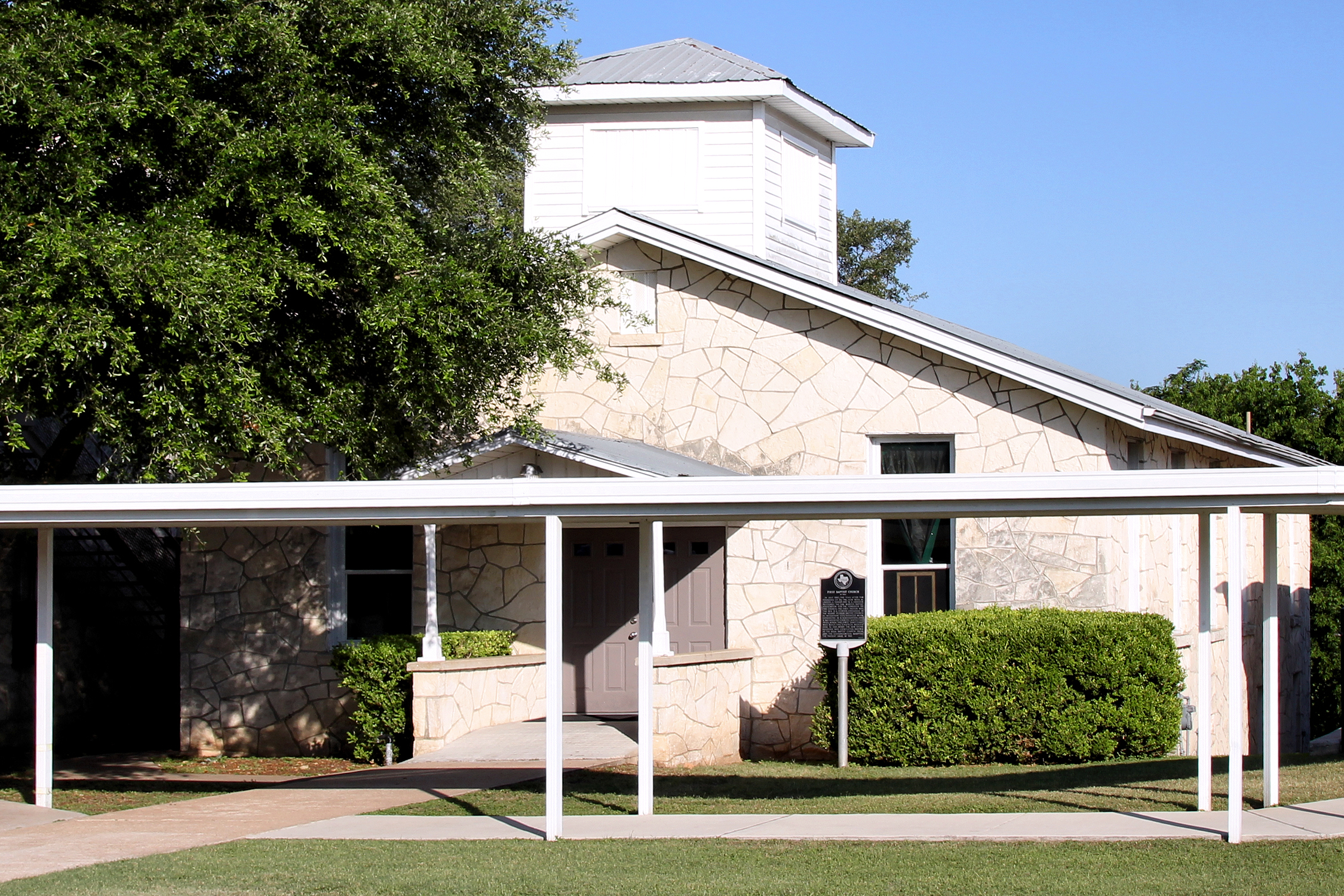
Planning a first church visit usually comes down to three decisions: when to arrive, where to go, and which next step makes the most sense for your household.
By Lena Ortiz | Updated May 8, 2026
If you are visiting Ridgecrest Baptist Church for the first time, the goal is not to overcomplicate the morning. A reasonable default is simple: confirm the schedule, review the Church Map, and decide in advance whether you are coming on your own, with a child, or with a student. That small amount of planning removes most of the usual friction.
Most first-time guests are trying to answer practical questions before they arrive:
- What time should I be there for Sunday classes or worship?
- Where should I park and which entrance should I use?
- If I am visiting with a child or teenager, where do I start?
- How do I find out what else is happening beyond one Sunday visit?
This guide is designed to answer those questions directly, using the same pages already built into the site. You will find the basic schedule, a step-by-step arrival plan, a short checklist for before, during, and after the service, and a clear path to the pages that matter most for a first visit.

First-Visit Terminology: What the Main Pages Mean
Church websites often assume readers already know the internal vocabulary. That is efficient for regular attenders and less efficient for guests. Here is the practical version.
| Page or term | What it means for a first-time guest | Best use |
|---|---|---|
| Sunday classes | Smaller age-based or group-based Bible study before the main service. | Use this if you want to arrive earlier and meet people in a smaller setting. |
| Morning worship | The main Sunday gathering with singing, prayer, and preaching. | Use this as the simplest starting point if you want one clear service time. |
| Church Map | The route and arrival page for campus directions. | Check this before you drive over, especially if you have children with you. |
| Events Calendar | The place to confirm the church’s regular weekly rhythm and upcoming events. | Check this first if you want to join something beyond a Sunday service. |
| News | Current announcements and practical updates. | Use this to confirm highlights, reminders, and ministry-specific updates. |
| Resources | Study support and follow-up material for learning more after a visit. | Use this if you want reading or sermon-support material after Sunday. |
Step 1: Pick the Right Arrival Plan
The best fit depends on what kind of first visit you want.
Option A: Simplest possible first visit
If you want the safest reasonable default, come for Sunday worship at 10:00 a.m.. That is the easiest option for a guest who wants one clear arrival time and one main gathering. It requires less navigation and less decision-making.
Option B: A slower start with more conversation
If you prefer a smaller setting first, arrive for Sunday classes at 8:45 a.m.. This can be a good fit if you want more time to settle in and ask questions before worship begins.
Option C: Midweek visit for families or students
If Sunday morning is not the right starting point, Wednesday ministries begin at 6:30 p.m.. The current site language points families to midweek options for preschool, children, and youth, which makes Wednesday a practical alternative if that schedule works better for your household.
The question is not which option is universally best. The better question is which option reduces friction for you. If you are visiting alone, Sunday worship is usually the cleanest entry point. If you are visiting with a child or student, a little extra planning pays off.
Step 2: Review the Campus Before You Leave
Before you drive over, open the Church Map page. Ridgecrest Baptist Church is listed at 1118 S. Sara Road, Blanchard, OK 73010. That page is the right place to confirm route details and get the campus in front of you before the day starts moving quickly.
Three practical reasons to use the map page:
- It reduces the chance of last-minute navigation stress.
- It gives you a better sense of when to leave home.
- It helps families arrive with enough time to orient themselves before classes or worship begin.
If you tend to like exact plans, aim to arrive 10 to 15 minutes early. That is not a rule; it is simply the easiest way to give yourself time to park, find the entrance, and ask a quick question if needed. Churches, like airports, are easier when you are not conducting a timing experiment.
Step 3: If You Are Visiting With Kids, Start Here
If you are visiting with a child, start with the Kids page before you do anything else. It gives the clearest summary of the family schedule already on the site:
- Children can join Sunday morning classes at 8:45 a.m.
- Preschool and children also have Wednesday evening ministry beginning at 6:30 p.m.
- The page explains that preschool meets in the main building and children in kindergarten through 5th grade meet in the children’s building on Wednesday nights.
That matters because the best first-visit plan for a family usually depends on logistics more than preference. Parents generally want to know where the child goes, when that transition happens, and whether they should contact the church in advance. The Kids page and the Contacts page answer most of that without guesswork.

A practical sequence for families looks like this:
- Check the Kids page for the age-specific rhythm.
- Open the Church Map to review arrival details.
- Use the Contacts page if you want to ask about classrooms or first-visit logistics before Sunday.
If you want a reasonable default, treat early arrival as the best tradeoff. It gives you time to locate the right area without rushing your child through the first few minutes.
Step 4: If You Are Visiting With a Student, Start With Youth
If your first question is really about a middle school or high school student, begin on the Youth page. The site describes Ridgecrest Youth as ministry for students in 6th through 12th grade, with Wednesday gathering beginning at 6:30 p.m.
This is useful for two reasons. First, it confirms the age range clearly. Second, it tells you that Wednesday is a main point of connection for students. If you want to visit with a teenager, that midweek gathering may be the best fit because it is specifically structured for youth rather than requiring them to infer where they belong on a first Sunday.
Parents can also use the Events Calendar and News pages to watch for special student events, schedule updates, or seasonal activities. If you need a direct answer before showing up, the Contacts page remains the cleanest escalation path.
Step 5: Know What to Expect During the Service
Ridgecrest’s public pages consistently describe a church built around biblical teaching, prayer, worship, and ministry for different age groups. For a guest, that usually means a service centered on singing, prayer, and preaching rather than a highly theatrical production or an opaque sequence of insider-only moments.
What should you reasonably expect?
- A clear schedule. Sunday classes begin at 8:45 a.m., and worship begins at 10:00 a.m.
- A casual planning posture. You do not need an advanced understanding of church structure to attend one service.
- A family-aware environment. The site gives separate attention to kids, youth, adult ministries, resources, and weekly events.
- A straightforward next step. If you have a question, the site consistently directs guests to Contacts or to a ministry-specific page.
The most useful expectation is not emotional certainty. It is procedural clarity. You are coming to a local church gathering, not an obstacle course. If you know the time, location, and your household’s starting point, you have already handled most of the uncertainty.
Common First-Visit Scenarios and the Best Fit for Each
Different households usually need different defaults. The easiest mistake is assuming every guest should follow the same plan. A better approach is to match the visit plan to the actual constraint in front of you.
| Scenario | Best starting point | Why this is a reasonable default |
|---|---|---|
| You are visiting by yourself and want the simplest option. | Sunday worship at 10:00 a.m. | One arrival time, one main service, fewer moving parts. |
| You are visiting with elementary-age children and want to reduce stress. | Review Kids, then arrive early for Sunday or Wednesday. | You can sort out classrooms and transitions before anything feels rushed. |
| You are visiting with a middle school or high school student. | Review Youth and consider Wednesday at 6:30 p.m. | The youth page points to a student-specific gathering rather than a generic arrival plan. |
| You want to meet people in a smaller setting first. | Sunday classes at 8:45 a.m. | Classes may offer a slower entry point than arriving just before worship. |
| You are unsure whether a special event is happening this week. | Check Events Calendar and News. | That combination usually answers both the timing question and the update question. |
This kind of decision table may feel overly orderly for a church visit, but order is helpful when you are new. The point is not to reduce the visit to logistics. The point is to remove avoidable friction so you can pay attention to the service rather than the parking lot, hallway, or clock.
Questions Worth Settling Before You Arrive
You do not need to answer every possible question in advance. You only need to answer the ones that change how you show up. In practice, that usually means five things.
- Which gathering am I attending? Pick Sunday classes, Sunday worship, or Wednesday ministry before the day begins.
- Am I bringing anyone who needs an age-specific ministry? If yes, go directly to Kids or Youth.
- Do I know how to get there? If not, use the Church Map rather than relying on memory or a vague screenshot.
- Is there a current announcement that changes the plan? Check News and the Events Calendar.
- Do I need to talk to someone before I come? If a question would materially affect your plan, use the Contacts page now instead of improvising later.
The discipline here is modest. You are not building an operational dashboard. You are clearing the few decisions that actually affect the visit.
What You Do Not Need to Overthink
Some first-time visitors spend energy on questions that do not improve the decision. That is understandable, but not always useful. Here are a few things you generally do not need to treat as major obstacles.
- You do not need perfect familiarity with the church. The site is already organized to orient guests toward About Us, Ministries, Kids, Youth, Events Calendar, News, Contacts, Church Map, and Resources.
- You do not need to predict every next step before one visit. One Sunday or Wednesday can simply be a first look.
- You do not need to absorb the whole website in one sitting. Start with the page that matches your immediate need, then move outward.
- You do not need to guess when the site already answers the question. If you want directions, use the map page. If you want timing, use the calendar. If you want contact, use Contacts.
That may sound obvious, but obvious systems are usually the ones that work. Visitors do better when the church website is used as a sequence rather than as a pile of tabs left open indefinitely.
A Short First-Visit Checklist
Before You Go
- Choose your starting point: Sunday classes, Sunday worship, or Wednesday ministry.
- Open the Church Map and confirm the route to 1118 S. Sara Road in Blanchard.
- If you are bringing a child, review the Kids page.
- If you are bringing a student, review the Youth page.
- If you want to clarify a detail before arriving, use the Contacts page or call the church office at (405) 387-2811.
During the Service
- Give yourself a few extra minutes to park and locate the right entrance.
- Pay attention to the church’s weekly rhythm and any announcements that point to your next step.
- If you are deciding between ministries, note whether the next best fit is in Ministries, Kids, or Youth.
After the Service
- Use the Events Calendar to see what happens next this week.
- Check the News page for current highlights and announcements.
- Visit Resources if you want sermon support, Bible-study help, or practical next-step material.
- If you still have questions, follow up through the Contacts page instead of guessing.
How to Find Upcoming Opportunities After Your First Visit
Many guests can manage one Sunday and still feel unsure about what comes next. The simplest way to solve that is to separate schedule information from church life information.
Use the Events Calendar for dates, times, and the weekly pattern. Use the News page for highlights, reminders, and the kinds of updates that answer, “Is there anything I should know before I come back?” That division is sensible. One page tells you when. The other tells you what matters.
If you want to join an event, check the calendar first. If you want to know whether something has been emphasized recently, check the news page. If you want a broader sense of where you might connect longer term, review Ministries. That sequence keeps you from treating every church question as if it needed a phone call.
How to Choose a Next Step After the Visit
After a first visit, many people are deciding among three different next steps: return to another service, explore a ministry, or keep learning before making another commitment. Those are not competing outcomes. They are simply different timing patterns.
If you want to return soon
Use the Events Calendar to confirm the next service or ministry time. This is the best fit for someone who already knows the visit made sense and just wants the next date.
If you want to understand where you fit
Open Ministries. That page is more useful than a generic search because it lets you compare connection points within the church’s actual structure. For families, that often means reviewing ministries alongside the Kids or Youth page rather than treating those pages separately.
If you want to learn more before deciding
Use Resources and About Us. This is the sensible path if you are still comparing churches, still asking basic questions, or simply prefer to move one step at a time.
Not all good decisions are fast ones. The better decision is usually the one with the clearest information and the least unnecessary pressure.
What to Read or Watch After Your Visit
The Resources page is the best next stop for someone who wants to keep thinking after Sunday. Some visitors want immediate involvement; others want a slower information path. The resources page is a better fit for the second group. It gives you room to learn without requiring an immediate decision.
A practical pattern might look like this:
- Read the About Us page if you want to understand the church’s overall identity and convictions.
- Review Ministries if you want to compare where adults, families, and students connect.
- Open Resources if you want to continue learning during the week.
A Practical Decision Path for Your First Visit
If you want the short version, use this decision path:
- Visiting alone? Start with Sunday worship at 10:00 a.m.
- Visiting with a child? Start with Kids, then review Church Map.
- Visiting with a student? Start with Youth, then check the Events Calendar.
- Need clarification before arriving? Use Contacts or call (405) 387-2811.
- Want a next step after the visit? Use News for current updates and Resources for follow-up learning.
Better decisions come from naming the constraint clearly. In this case, the constraint is usually time, not mystery. Once you know your arrival plan and your household’s starting point, Ridgecrest’s site gives you the rest of the information in a fairly direct sequence.
Final Takeaway
Your first visit to Ridgecrest Baptist Church does not require perfect preparation. It requires a few useful choices made in the right order. Start with the service time that fits you best, use the Church Map before you leave, check the Kids or Youth page if you are bringing family, and use Contacts if a detail still feels unclear.
If you are ready to plan the visit now, the safest reasonable default is this: review the Church Map, confirm the time on the Events Calendar, and keep the Contacts page handy in case you need one last detail before you go.